
 By Willy · Founder & Lead Diesel Specialist
Willys Workshop · Oxley & Warana · 20+ years hands-on diesel experience
Number three or number four piston, a hole in the crown or a crack through the top ring land. That’s the failure the ZD30 is known for, and it’s why Nissan’s 2,953cc turbo diesel four carries the reputation it does. In the GU Patrol from 2000 it made 116kW and 345Nm in direct injection form, and 118kW and 380Nm once it went common rail, often listed as the CRD.
This guide covers how to tell a ZD30DI from a ZD30CR, the Australian outputs, the piston failure, and the order to spend money in if you want to keep one alive. If you already know what you need, go straight to the ZD30 parts or the engine rebuild kits we stock.
Quick Links
- ZD30DI or ZD30CR, and how to tell
- Outputs and specifications
- The piston failure and its likely causes
- All three causes are air faults
- The ZD30 build order
- Intercooler: top mount or front mount
- Injectors and the injection pump
- The ZD30 turbo
- When the engine has failed
- What ZD30 parts cost
- Buying a used ZD30
- Common questions
What the ZD30 is
Nissan put the ZD30 into the Patrol in 2000, as an option on the wagons and cab chassis. It sat alongside the 4.2 litre six and didn’t replace it. For the time it was a modern design: 2,953cc, double overhead cams, four valves per cylinder, and balance shafts to cancel the vibration a big four makes.
It ran to the end of the Y61 in 2016, so there are plenty around in very different health.
ZD30DI or ZD30CR, and how to tell
Sort this out first, because the two take different parts. The ZD30DI is the earlier direct injection engine, with a conventional injection pump feeding each cylinder. The ZD30CR (the CRD) is the later common rail engine. The changeover lands at 2006. Common rail helped with some of the engine management problems behind boost spikes and wrong fuel-air mixtures. It didn’t cure them.
You can tell them apart with the bonnet up in under a minute. A DI has an injection pump with hard lines running to each injector. A CR has a fuel rail across the top of the head with short lines down to the injectors.
| ZD30DI | ZD30CR | |
|---|---|---|
| Fuel system | Conventional pump, hard lines to each injector | Common rail with a fuel rail across the head |
| Australian era in the Patrol | 2000 to 2006 | 2006 to 2016 |
| Patrol output | 116kW at 3,600rpm and 345Nm at 2,000rpm | 118kW and 380Nm |
Rebuild kits, intercooler kits, injector fit sets and boost hose sets all differ between the two. A few seals are shared, like the small front cover O-ring, but check each part against your engine code.
Australian outputs and specifications
The 116kW and 345Nm figures are the Patrol at its 2000 launch, so they’re direct injection numbers. The common rail figures are for a 2010 DX 4×4. In the Navara, a 2006 DX 4×4 single cab 3.0 litre made 110kW and 314Nm.
| Specification | Value |
|---|---|
| Configuration | Inline four, double overhead cams, four valves per cylinder |
| Displacement | 2,953cc |
| Balance shafts | Fitted |
| Factory intercooler | Top mount, core 170x250x60mm on the GU |
The piston failure and its likely causes
Most ZD30 failures involved number three or number four piston, with either a hole in the crown or a crack through the top ring land. The fix was a complete bottom end rebuild.
These are the three likely causes, not proven ones:
- EGR valve action upsetting the fuel-air mixture and causing hot spots in the combustion chamber.
- A MAF sensor contaminated with oil from the inlet tract, sending the ECU a wrong air reading and giving the wrong fuel-air mixture.
- Slow response to ECU boost commands. The computer sees the overboost but the hardware is too slow to pull it back, so the engine takes damaging boost spikes.
The EGR feeds exhaust gas back into the intake to lower combustion temperature. That gas carries soot, which meets oil vapour from the crankcase breather and forms a thick tar that blocks the inlet runners. The same vapour fouls the MAF and MAP sensors.
Boost spikes over 20psi are reported, and up to 25psi isn’t uncommon.
Oil level is the other known issue. Owners got oil starvation even though the dipstick wasn’t reading critically low, and Nissan later revised the oil capacity up from six litres to 8.3 litres and had dealers shorten and recalibrate dipsticks. Check the correct capacity for your engine before you fill it.
All three causes are air faults
Line the three causes up and none of them is a fuel problem. The EGR changes what’s in the cylinder. The dirty MAF tells the ECU the wrong amount of air arrived. The boost spike pushes in more air than the control loop expected. In each case the fuel side is doing its job with bad information about the air.
With a tired diesel most people reach for fuel first. On this engine that’s backwards, because more fuel on top of wrong air data makes the hot spot worse. So check the MAF before you buy injectors, log the boost before you tune, and clean the intake before you chase smoke.
The ZD30 build order
Work down the list and stop when the problem stops. Nothing before step five adds power, and that’s on purpose.
- Get the oil right. Confirm the correct capacity for your engine and check whether the dipstick is the corrected one. It’s the cheapest item on the list.
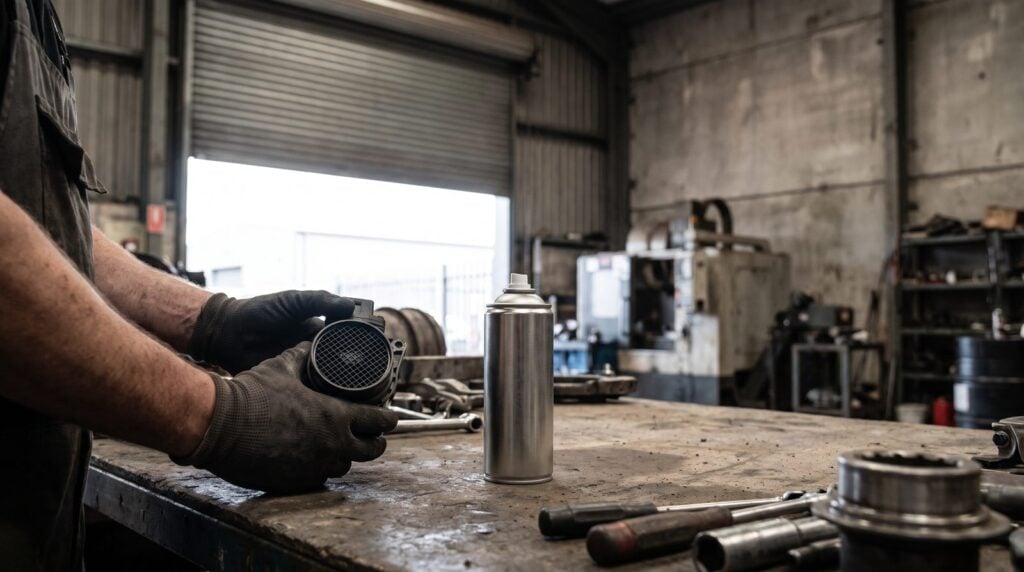
- Clear the intake carbon and stop it coming back. Pull the inlet pipe and have a look. Cleaning the tar out of the runners is only half the job, so check the MAF while you’re there and fit a catch can. Replace the MAF if the old one is past saving.
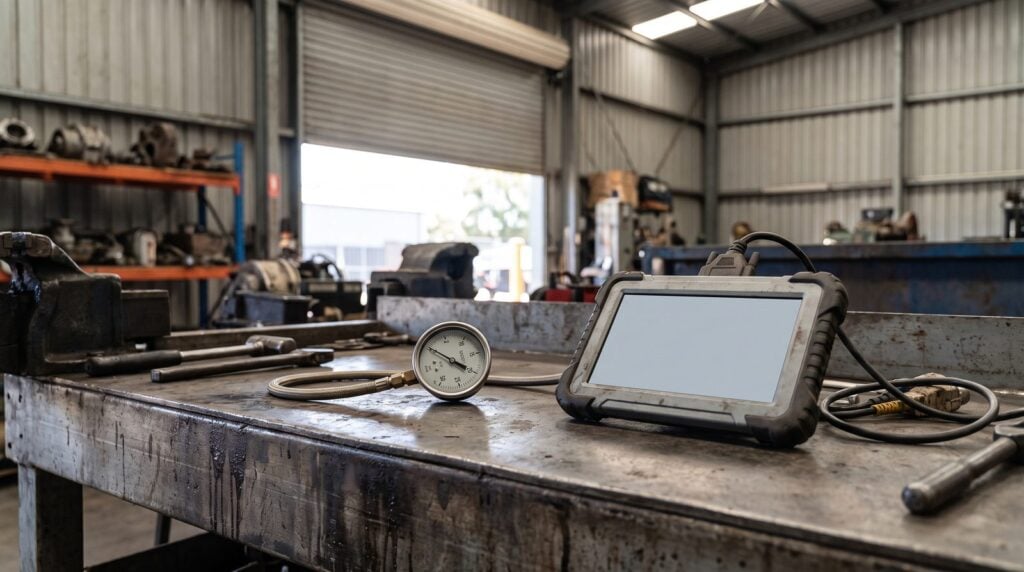
- Log the boost, then check the fuel control. Get a real boost number, then check the fuel side: the injection pump on a DI, rail pressure and injector return on a CR.
- Fix the cooling before you add heat. Every proposed cause runs through combustion heat, so a tired radiator, weak water pump or stuck thermostat all make it worse. These are cheap next to a rebuild. See our cooling parts.
- Sort the charge air and the exhaust. The factory intercooler is a known leaker, and a well designed exhaust lowers exhaust gas temperature. This is the first step that adds anything.
- Then consider a tune. On a ZD30 a tune is mostly about safety margin: capping boost where it belongs, matching fuel to the air that actually arrives, and keeping exhaust gas temperature down. Tune an engine with a fouled MAF, a leaking intercooler or a spiking turbo and you’ve locked the fault in. See Nissan Patrol tuning and servicing, or the ultimate guide to diesel tuning for the principles.
If the engine has already let go, skip the list. That failure means a bottom end rebuild, so plan the whole job.
Intercooler: top mount or front mount
The GU Patrol ZD30 came with a top mount intercooler, and it has a known weak spot. The end tanks are pressed onto the core with a rubber O-ring between them, and they leak at that joint. You get poor running, not a puddle, which is why it gets missed.
On a GU ZD30 the sensible fix is a direct replacement top mount. It bolts in where the factory one sat, with no cutting. We stock HPD kits for both DI and CR. The supplier quotes a 280x240x76mm bar and plate core against the factory 170x250x60mm, with a thermo fan, and rates the kit to around 120kW at the wheels. There’s a Series 2 top mount for engines making more.
A GQ Patrol never had a ZD30 from the factory. On a standard GQ the front mount kit you want is the TD42 one, matched to the TD42 turbo kit. If someone has put a ZD30 into a GQ, nothing off the shelf fits, so ask before ordering.
There’s also a kit for the Navara D22. On any of them, do the boost hose set at the same time, because perished hoses undo the work. The full intercooler range covers other vehicles.
Injectors and the injection pump
Injectors are the most searched ZD30 part, but since the failure causes are all air faults they’re rarely the whole answer. These engines are old, though, and pumps and injectors do wear. On a ZD30DI the injection pump is the mechanical unit on the front of the engine, feeding hard lines to each injector. That’s usually what people mean by a ZD30 injector pump. On a ZD30CR it’s a high pressure pump feeding a common rail, which feeds electronically controlled injectors. They don’t swap and they don’t fail the same way.
Test before you buy. On either engine, a leak-back test shows whether the injectors are passing fuel back to tank. On a common rail, actual against commanded rail pressure separates a tired pump from tired injectors, and per-cylinder fuel corrections point at the bad injector. A DI has no rail to read, so it comes down to pump timing and delivery. Hard starting, smoke and a flat top end are the usual signs.
Whatever you replace, order the matching fit set with it. The seals aren’t optional, and finding that out afterwards means paying the labour twice. Our ZD30 injectors and pump guide goes further into symptoms and replacement, and diesel injectors by vehicle finds the right part for your build date.
The ZD30 turbo
There’s no turbo kit for a ZD30 because it came with one: a variable vane unit run by the ECU and an electric boost controller. Slow response from that hardware is one of the three proposed causes of the piston failure. So look at how the turbo is controlled before you think about more boost. Sticking vanes, a tired actuator or a lazy boost controller all show up in a boost log. Fixing them is reliability work that also makes it drive better.
We don’t currently list a ZD30 turbocharger. We do carry the parts around it, including a 3 bolt Patrol 3.0 litre turbo flange and GU 3.0 litre dump pipes, and the turbocharger range covers other engines. If you need a ZD30 turbo, ask us.
When the engine has failed
Repair the single fault. If compression and leak-down come back healthy, the engine hasn’t failed. You’ve got a contaminated MAF, a restricted intake, a boost spike or the wrong oil quantity, and every item on the build order costs a fraction of a bottom end rebuild.
Rebuild it. If number three or four has holed a crown or cracked the top ring land, you’re doing a complete bottom end, not one piston. Once that material has gone through the engine, every bearing surface in the bottom end is suspect.
Buy a used engine. It’s the same design with the same failure, minus the service history. You’re just moving the problem.
Move the vehicle on. If the body, driveline and running gear are as tired as the engine, that’s a fair call.
If you rebuild, a kit is replacement parts in a box and nothing else. Machining the block and crank, the labour to strip and reassemble, and often a cylinder head all sit on top, and the finished job comes to several times the kit price. We quote each one individually, because the number depends on what the machine shop measures. Order against your engine code, because the DI and CR kits are different. They’re in our engine rebuild kit range.
What is in a kit, and what is not
The ZD30CR kit lists its contents in full: a TIK piston set, a TP ring set, a KP VRS gasket set with OE head gaskets, a KP lower gasket set with OE crank seals, an NVP main bearing set, an NDC conrod bearing set, a thrust washer set, a head bolt set and an NVP timing chain set. It doesn’t include a cylinder head, camshafts, oil or water pump, injectors, turbo, or any machining or assembly labour. Only the ZD30CR kit publishes a contents list, so confirm what’s supplied with the others.
Kits are ordered by piston, ring and bearing size, which you can’t know until the block and crank are measured. If STD, 0.25 and 0.50 don’t mean anything to you yet, our guide to bearing and piston sizes explains what to send us.
What the ARP kits add
The two dearest kits swap the standard fasteners for uprated ARP hardware. The listings don’t say which fasteners, so confirm with us before ordering. You can only get at them while the engine is apart, so if it’s going back together with more boost and a tune, decide now. If it’s going back to standard boost, the standard kit already includes a head bolt set. Either way, the fasteners don’t fix the piston failure.
What ZD30 parts cost
These are starting prices for parts only. Fitting, machining and coding are on top. The rest of the range is under Nissan Patrol parts.
| Part | ZD30DI | ZD30CR |
|---|---|---|
| Engine rebuild kit | from $1,800.27 | from $1,900.57 |
| High performance engine rebuild kit | $2,221.88 | $2,267.23 |
| High performance kit with ARP hardware | $3,090.48 | $3,330.90 |
| GU top mount intercooler kit | $1,555.00 | $1,550.00 |
| Boost hose set | $79.00 | $198.00 |
| Injector fit set | $153.45 | $141.90 |
Other parts from this guide:
- Series 2 top mount intercooler kit, GU ZD30CR: $2,150.00
- Intercooler kit, Navara D22 ZD30: $1,525.00
- Diesel injector, GU Patrol ZD30: $545.00, or a set of four for $2,095.00
- Bosch injector, ZD30CR 2007 on: $575.00
- High pressure fuel pump, GU Patrol ZD30: $1,885.00
- Mass air flow sensor, four pin: $266.20
- HPD catch can, GU Patrol or Navara D22: $410.00
Buying a used ZD30
- Compression and leak-down test. It’s the direct test for the piston failure, and far cheaper than finding out later.
- Pull the intake pipe. A heavy tar deposit means the crankcase breather has been feeding the intake for a long time.
- Check the MAF, the intercooler and the oil level. These are the problems that stack up.
- Look for cooling and oil work in the service history. On this engine that matters more than low kilometres.
Run the VIN through the PPSR to check for finance owing and stolen or written-off status, then check the recall register at Product Safety Australia.
Common questions
Is the Nissan ZD30 a bad engine?
Its reputation comes from a real failure: a holed or cracked number three or four piston, fixed with a full bottom end rebuild. It isn’t a hopeless engine, but it punishes neglect of the air side and the oil level more than most diesels.
Top mount or front mount intercooler on a Patrol ZD30?
Top mount. The factory unit leaks at its pressed-on end tanks and the replacement bolts straight in. The front mount kits in our range are for the TD42, not the ZD30.
Is there a turbo kit for a ZD30?
No, and it doesn’t need one. It came turbocharged from the factory. The Patrol turbo kits you’ll find, GT28 and GTX28 based, are conversions for the naturally aspirated TD42 4.2 litre. If your ZD30 turbo is playing up, it’s usually sticking vanes or a lazy actuator causing boost spikes, and that’s a control fix.
How much does a ZD30 rebuild cost?
Rebuild kits start at $1,800.27 for a ZD30DI and $1,900.57 for a ZD30CR. Those are parts prices only. Machining, assembly and fitting are on top, and the finished job comes to several times the kit price, so we quote each engine once it’s been measured.
Check your engine code before you order
Send your build date and engine code, or a photo of the top of the engine, through our contact page and we’ll confirm DI or CR before anything ships. If you want the whole build planned, tell us what the vehicle does. Our founder Willy has more than 20 years on the tools as a heavy diesel mechanic, and the team works on diesels across our Brisbane and Sunshine Coast workshops.
Last updated: October 2026