How do I know if my turbo is failing?
The common signs are a whistle or whine that rises with boost, blue or black smoke, a clear loss of power, surging boost, or the engine dropping into limp mode. Oil in the intercooler piping is another big one. If you’ve got any of those, get it checked early — a turbo that lets go can send debris into the engine.
Can a turbo be repaired, or does it need replacing?
Plenty can be repaired. Variable-geometry (VNT/VGT) turbos that carbon up and stick can often be cleaned, freed and recalibrated, and a faulty actuator can be repaired or replaced on its own. We test it properly first — if the core is worn or the shaft has play, then a recon or replacement is the right call, and we’ll tell you straight which it is.
What is a VNT or VGT turbo?
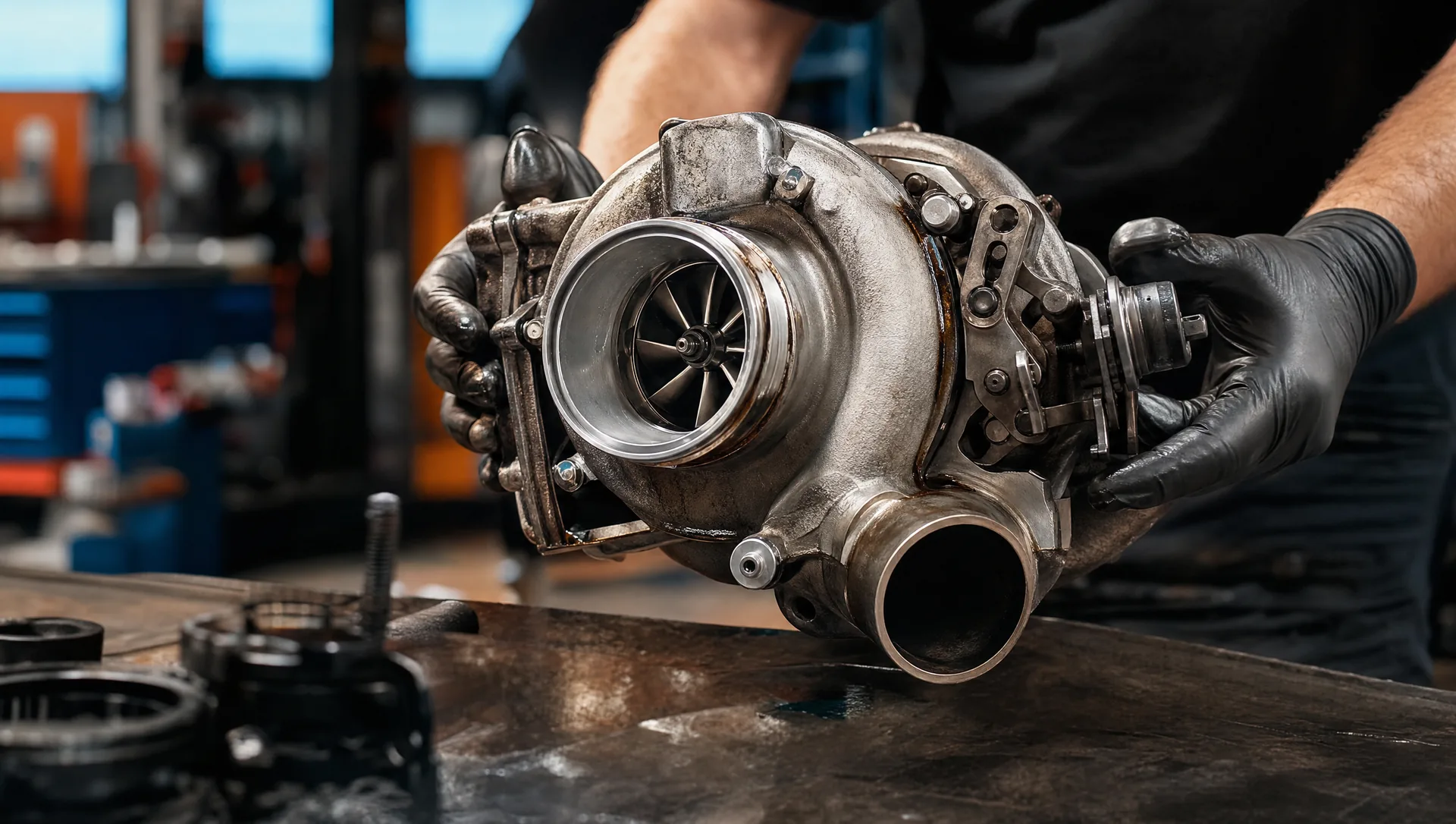
It’s a variable-geometry turbo — it has moveable vanes that change the boost across the rev range so you get response down low and power up top. They’re great until the vanes carbon up and stick, which causes surging, overboost, underboost or limp mode. We specialise in sorting them out without always going to a whole new turbo.
Why did my turbo fail?
A turbo rarely fails for no reason. The usual culprits are oil starvation (a blocked feed or skipped oil changes), a blocked breather, carbon build-up on the vanes, or boost leaks from split pipes. We find the actual cause before fitting another one — otherwise the new turbo goes the same way.
How much does a turbo repair or replacement cost?
It ranges from a clean-and-recalibrate or actuator repair right up to a full replacement, so we won’t quote blind. After we’ve boost-tested and inspected it you get a firm price, plus an honest call on whether a repair will do it or it’s genuinely time for a new unit.
My diesel blows smoke — is that the turbo?
It can be. Blue smoke usually means oil getting past the turbo seals, while black smoke is more about fuelling or boost. Smoke has a few possible causes though, so we diagnose it properly rather than condemning the turbo on a hunch. Sometimes it’s the turbo, sometimes it’s feeding it.
Do you do turbos on tuned diesels?
We do, and we factor the tune in. More fuel and boost load a turbo harder, so on a tuned diesel we make sure the replacement or repair suits the power level — and we can talk to the tune if the boost demands are part of why it failed.
Will a failing turbo damage my engine?
It can, which is why we don’t muck around with it. If the turbo lets go it can send metal or oil into the intake and on into the engine, and oil getting past the seals can cause a runaway on a diesel. Catching it early and sorting the cause is far cheaper than the engine repair that follows a turbo that’s been left.
Why use a diesel specialist for turbo work?
Turbos fail because of what’s feeding them — oil, breathers, boost leaks, tuning. A general shop bolts on a new turbo and hopes. We’re a diesel shop, so we find the cause, sort it, and fit the right unit for how the vehicle’s set up. That’s what stops you buying two turbos in a year.