
 By Willy · Founder & Lead Diesel Specialist
Willys Workshop · Oxley & Warana · 20+ years hands-on diesel experience
On a 4D56, the number stamped on the block tells you how worried to be. Mitsubishi’s 2.5 litre four cylinder turbo diesel is best known here as the Triton engine. It arrived in the ML Triton in May 2008 at 100kW and 314Nm, and the MN Triton added a 131kW version making up to 400Nm. The 131kW engine is known as the 4D56HP.
This guide covers which Australian vehicles got it and at what outputs, the overheating service campaign Mitsubishi ran on it, the timing belt, and the rebuild. Suction control valve faults have their own guide, 4D56 SCV faults on the Triton, so they aren’t repeated here.
Quick Links
- What the 4D56 is
- Australian vehicles and outputs
- Common problems
- The March 2014 engine number
- The timing belt
- Rebuild, repair or replace
- The rebuild, step by step
- Exhaust
- What 4D56 parts cost
- Buying a used 4D56
- Common questions
What the 4D56 is
The 4D56 is a 2.5 litre inline four turbo diesel that Mitsubishi built for a very long time in several states of tune, so a part that fits one 4D56 won’t necessarily fit another. The 2.5 litre in the PB Challenger, a wagon based on the MN Triton, is a common rail, intercooled turbo diesel.
Common rail injection uses one high pressure rail to feed all the injectors, and the ECU sets injection timing and duration independently of engine speed. That’s why clean fuel matters far more on a common rail 4D56 than on the older indirect injection versions.
Parts catalogues use two naming conventions. The common rail engines are listed as 4D56CR and are DOHC 16 valve. The older turbo engines are listed alongside the 4D55 as 8 valve SOHC. If a listing doesn’t say which, ask before you pay. For bore, stroke and compression, go by the workshop manual for your build. Those are machining numbers, and a wrong one costs you a block.
Australian vehicles and outputs
Outputs vary across the range. On the 131kW engine they even vary between two vehicles with the same badge, because the gearbox changes the torque figure.
| Vehicle | Drive | Years | Peak power | Peak torque |
|---|---|---|---|---|
| ML Triton utility | RWD | 2008 to 2009 | 100kW at 3,800rpm | 314Nm at 2,000rpm |
| MN Triton utility | RWD | 2009 to 2014 | 100kW at 3,800rpm | 314Nm at 2,000rpm |
| MN Triton utility, 131kW | RWD and 4WD | 2009 to 2014 | 131kW at 4,000rpm | 400Nm manual, 350Nm auto, both at 2,000rpm |
| PB Challenger wagon | 4WD, plus RWD from 2011 | 2009 to 2013, manual from 2011 | 131kW at 4,000rpm | 400Nm manual at 2,000rpm, 350Nm auto at 1,800rpm |
| PC Challenger wagon | 4WD | 2013 to 2015 | 131kW at 4,000rpm | 400Nm manual at 2,000rpm, 350Nm auto at 1,800rpm |
The 2.5 diesel didn’t arrive with the ML Triton. It came in May 2008, so an early ML is a 3.2 litre 4M41 turbo diesel or a petrol. The 100kW engine didn’t disappear when the 131kW one arrived either. The two ran side by side to the end of MN production. Single cabs only moved to the more powerful engine in the October 2012 update, and the Club cab kept the 100kW to 2014. Don’t order 4D56 parts off the model badge.
Every 100kW 2.5 in the ML and MN was rear wheel drive. A 4WD Triton with the 2.5 diesel is a 131kW car.
The Challenger matches the Triton on power and manual torque, but the auto’s 350Nm peak comes in 200rpm lower. If you own a Challenger, read the code stamped on your block before you order engine parts.
It isn’t the engine in a modern Australian Pajero, either. The Mk.3 Pajero used the 2.8 litre 4M40 from May 2000, then the 3.2 litre 4M41 from May 2002.
Common problems
Overheating and coolant loss on the 4D56HP
This is the one to know first, because Mitsubishi documented it.
In November 2014 Mitsubishi started preventative action service campaign 020116 for Tritons with the 2.5 litre 4D56HP built before 18 March 2014. The bulletin describes engines overheating from coolant loss caused by repeated coolant evaporation, which could happen after high load driving such as towing. It adds that where the head gasket didn’t seal well against the upper surface of the block, because that surface was rough, coolant blow-by could happen and add to the overheating.
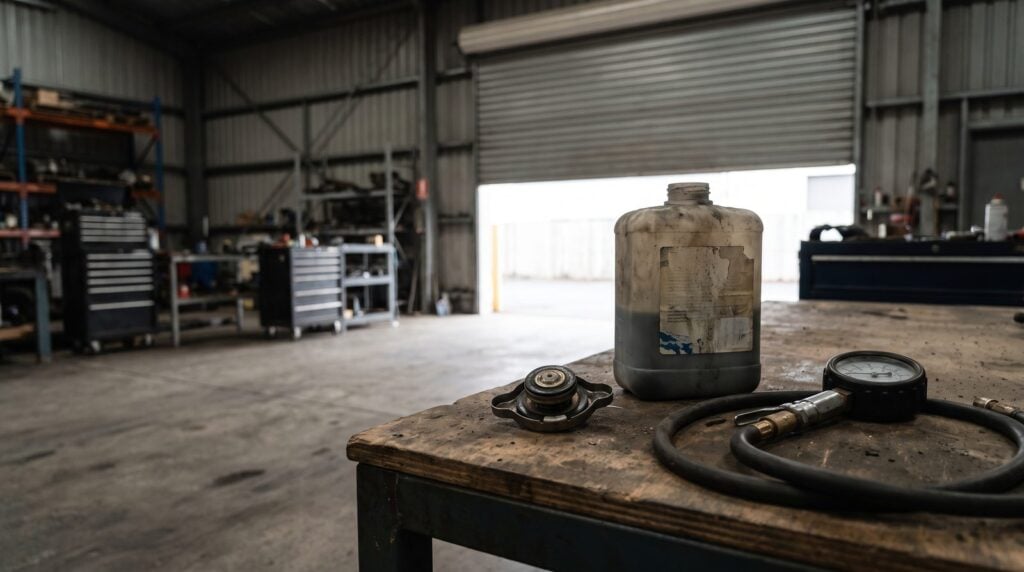
The campaign fitted a higher pressure radiator cap with a 127 kPa sticker, changed the coolant to 50 per cent concentration from 30 per cent, and reprogrammed the ECU to pick up coolant loss earlier. That raised the boiling point and gave earlier warning, but didn’t fix the head gasket sealing. That was dealt with in production, covered below.
Injectors and the fuel system
Common rail injectors wear out on every engine of this type. Watch for white smoke on a cold start that’s slow to clear, a rough idle that smooths out as it warms up, harder starting, and fuel use creeping up when you haven’t changed how you drive.
Do injectors as a set. Replace one and leave three tired ones and it still runs unevenly, and you get a second bill a few months later. Do the injector line set and seals at the same time. If the complaint is surging, a flat spot under hard acceleration or a jump in fuel use, with no smoke, read the SCV guide first, because the two faults get confused and the tests are different. SCV failure is a known fault on the Triton’s 3.2 litre 4M41. On a 4D56, test for it before you assume it.
Turbocharger
We don’t currently list a turbo for the 4D56. If yours has failed, find out why before you buy another. Check the oil feed and drain and make sure the actuator moves through its full travel, because a restricted oil supply or blocked drain kills a new turbo quickly. On an engine with a known overheating history, a turbo failure is often a symptom, not the cause. Send us the details through our contact page and we’ll tell you whether we can help.
EGR and intake fouling
Exhaust gas recirculation sends some exhaust gas back into the intake to lower combustion temperature. That gas carries soot, and when soot meets oil vapour from the crankcase it builds a hard deposit in the intake and the EGR cooler. It’s a known problem on the Triton’s 4M41, where the sludge blocks airflow, and the same thing happens on any diesel with EGR. A catch can fitted early takes the oil vapour out before it meets the soot. There are kits listed for the Challenger and Triton, including the ProVent Ultimate and an HPD 2.5 litre kit.
The March 2014 engine number
On any 4D56HP, the practical question is which side of the change your engine sits, and you answer it from the engine number, not the build year. Mitsubishi made four production changes to cut down 4D56HP overheating.
| Production change | Detail | Effective from |
|---|---|---|
| ECU programming | Earlier detection of coolant loss | 9 September 2013 |
| Coolant concentration | Raised to 50 per cent, previously 30 per cent | 22 November 2013 |
| Radiator cap opening pressure | Raised to 127 kPa, previously 109 kPa | 21 February 2014 |
| Upper cylinder block surface | Made smoother, corresponding to engine number 4D56 UCFA9504 | 18 March 2014 |
- Engine number after 4D56 UCFA9504. Your block has the smoother upper surface, the only one of the four changes that’s physical.
- Engine number before it. You’re in the group the campaign was written for. That doesn’t mean it will fail, but find out whether campaign 020116 was done, and treat the coolant level as a service item.
- Check the cap either way. A 127 kPa sticker takes two seconds to find and tells you something about the vehicle’s history.
- If you tow. The bulletin ties the coolant loss to high load driving like towing, so the check matters more.
A service campaign isn’t a recall, so check both. Run the VIN through the PPSR for money owing and stolen or written-off status, and check the recall register at Product Safety Australia.
The timing belt
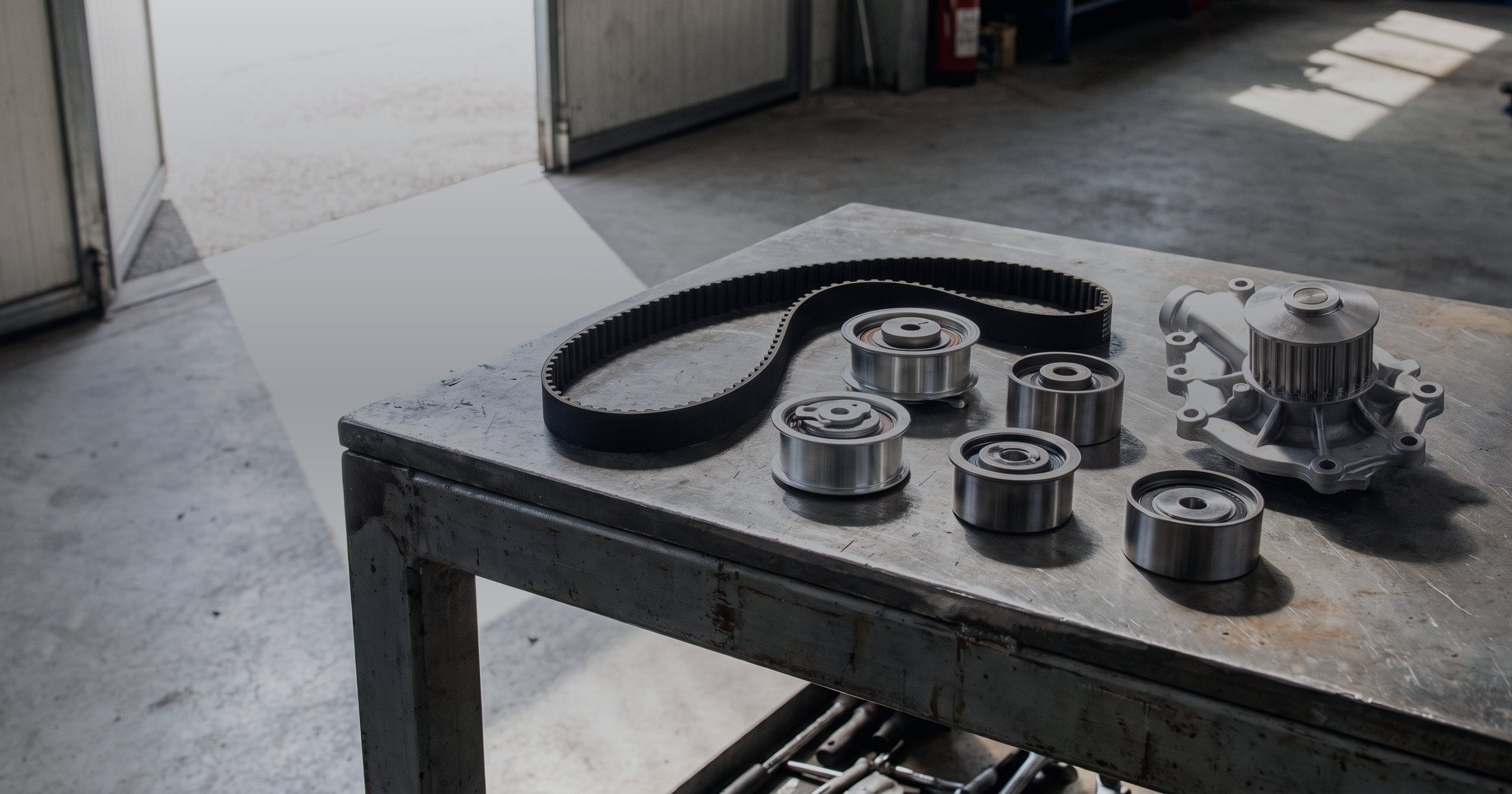
The timing parts for the common rail 4D56 are belt sets. For the 3.2 litre 4M41 in the same ute they’re chain sets with gears. Same vehicle, two very different maintenance bills.
A timing belt is a toothed rubber drive that keeps the crank and cams in time, and it has a service life in kilometres or years, whichever comes first. A chain is designed to last the life of the engine and usually only gets touched when it rattles.
Most buyers never price that in. Two Tritons of similar age and price can have quite different running costs ahead of them, and the cheaper looking one is often the one with a belt due. Take the interval from the service schedule for your exact build, and work it out from both the odometer and the date. Belts age sitting still, so a low kilometre Triton that spent five years in a shed still needs one.
Do the water pump, tensioner and idlers with the belt, because you’ve already paid for the labour. The 4D56CR belt sets come with and without a hydraulic tensioner, and they’re different parts for different builds, so confirm which one your engine takes. Don’t pick on price.
Rebuild, repair or replace
Once you’ve got a diagnosis on a tired or damaged 4D56, you’ve got four options, and only one of them is a rebuild.
Repair the single fault when the rest of the engine is sound: even compression, no oil in the coolant, no coolant in the oil, sensible oil pressure. A set of injectors or an overdue belt job is a repair, and repairs on this engine are usually worth doing.
Rebuild when compression and leak-down say the bores and rings are done, or when the coolant loss traces back to the block deck. That second case is the one the campaign bulletin describes. A deck that won’t seal means the engine comes out and a machine shop looks at it, and once it’s on the bench, doing the bottom end properly is far cheaper than doing it twice.
Buy a used engine only with the donor’s engine number in your hand. A block built before 4D56 UCFA9504 is in the same group campaign 020116 covered, so you can inherit the fault you’re trying to get away from. You also get no belt history and no compression figures.
Move the vehicle on when the sums stop working. A tired 100kW rear wheel drive ML is a different sum to a 131kW 4WD MN you plan to keep towing with.
The rebuild kit
An engine rebuild kit is a matched set of the wearing parts for a bottom end, usually pistons, rings, bearings and gaskets, made to one spec so the clearances agree. There’s one kit for this engine, for the 4D56Di-T common rail. It doesn’t cover the older 8 valve SOHC 4D55 and 4D56T. Those take the separately listed rings, bearings and gasket sets.
A kit is parts only. Machining, assembly labour and often a cylinder head sit on top, and the finished job runs to several times the kit price, so we quote each one once the block has been measured. The 4D56Di-T kit doesn’t include the timing parts, so the belt set is a separate line. The listing doesn’t itemise every part, so confirm the contents with us before you order.
Kits are ordered by machining size, and your machinist gives you those numbers once the engine is stripped. If STD, 0.25 and 0.50 don’t mean anything to you yet, our guide to bearing and piston sizes explains what to send us. The full range is under engine rebuild kits.
The rebuild, step by step
- Diagnose first. Compression and leak-down, a cooling system pressure test, and an injector test. On this engine the cooling test isn’t optional.
- Decide between repair and rebuild on the evidence. A head gasket on a rough deck may not hold, so get a machine shop’s opinion on the deck before you buy another gasket.
- Rebuild with a matched kit so the internals agree with each other. Piston, ring and bearing sets are listed separately for smaller jobs.
- Do the timing and cooling parts while it’s apart. Belt set, tensioner, hose set. Access will never be cheaper.
- Fix the cause. If it overheated, the radiator, cap, fan and coolant mix all get checked before it goes back in.
If you regularly tow behind a 131kW manual making 400Nm, look at the driveline too. Our NPC performance clutch guide covers matching a clutch to a towing load.
Exhaust
Exhaust is listed against the vehicle, not the engine code, so it won’t turn up if you search on 4D56. For the 131kW MN Triton and the PB Challenger, the Manta range covers everything from the turbo back.
The dump pipe bolts to the turbine housing and carries gas into the rest of the system. The engine pipe runs from there to the centre section. A full turbo-back system replaces the lot. Which dump pipe you need depends on whether you’re keeping the standard centre section, so send us a photo of what’s under the car before you order.
What 4D56 parts cost
These are parts prices. Fitting, machining and coding are on top.
| Part | Price |
|---|---|
| Engine rebuild kit, 4D56Di-T common rail | $1,612.80 |
| NVP timing belt sets, 4D56CR (two versions) | $485.00 and $550.00 |
| Genuine full gasket set, 4D56CR DOHC | $508.00 |
| Denso injector, 4D56 2.5L common rail Triton, each | $565.00 |
| Genuine injector line set, 4D56CR | $364.10 |
| NVP cooling hose set, 4D56CR Triton | $434.50 |
| Crankshaft, 4D56CR, only if yours won’t clean up | $825.00 |
| Catch can kit, ProVent Ultimate or HPD 2.5 litre | $450.00 to $410.00 |
Ask us for a price on a set of four injectors. For the older 8 valve engines, an NPR ring set for the 4D55 and 4D56T is $245.00.
Exhaust for the 131kW MN Triton and PB Challenger, all with the cat retained:
- 3in dump pipe with cat: $650.00
- Triton MN manual 4×4 system with cat, no muffler: $1,649.77
- Challenger PB 3in system with cat: $1,926.63
- 3in centre section without muffler: $345.00
Some of these come in other materials or tail layouts at a higher price, so treat each figure as the starting price for that part.
Buying a used 4D56
- Engine number against 4D56 UCFA9504. It tells you which side of the March 2014 block change you’re on.
- Radiator cap and coolant. Look for the 127 kPa cap, check the coolant is at strength, and check the overflow bottle for oil.
- Cold start. White smoke that hangs around points at injectors.
- Timing belt evidence. A sticker, an invoice, or nothing. Nothing means budget for one.
- Towing history. A ute that’s lived behind a van needs a cooling system pressure test.
- Recalls as well as the campaign. The MN Triton has a Takata driver airbag recall covering 2010 to 2014 model years, plus recalls for power seat wiring, a front lower control arm weld and a front tailshaft weld. Run the VIN. Don’t take the seller’s word.
Comparing it with a Toyota of the same era? Our Toyota 1KD-FTV engine guide sets out that engine’s known faults the same way.
Common questions
Is the 4D56 a reliable engine?
It’s a long lived design with one documented weak spot. Mitsubishi ran service campaign 020116 in November 2014 for 2.5 litre 4D56HP Tritons built before 18 March 2014, for overheating from coolant loss, with head gasket sealing at the top of the block as a contributing cause. Owners who keep the cooling system right, look after the injectors and do the timing belt on time generally do well.
Does the 4D56 have a timing belt or a chain?
The common rail 4D56 takes timing belt sets. The 3.2 litre 4M41 in the same vehicle takes chain sets. Take the belt interval from the service schedule for your build, and replace the water pump, tensioner and idlers at the same time.
Why is my Triton losing coolant with no visible leak?
That’s the pattern the 2014 bulletin describes on the 4D56HP: coolant lost through repeated evaporation after high load driving, with coolant blow-by possible where the head gasket doesn’t seal against a rough block surface. Get the cooling system pressure tested and the block deck checked before you keep topping it up.
Is the Challenger engine the same as the Triton engine?
They share a platform, and the PB Challenger is based on the MN Triton. Power is the same 131kW and manual torque the same 400Nm, but the auto’s 350Nm peak comes in at 1,800rpm in the Challenger against 2,000rpm in the Triton. Engine parts are listed against the engine code or the Triton, not the Challenger, so check the code stamped on your block before you order.
Check your engine number against the campaign
This engine ran for years in several states of tune, so check fitment first. Send us your VIN, build date and the engine number stamped on the block, and we’ll confirm the part number for engine internals, timing components, gaskets and seals or exhaust before you order. Our founder Willy has more than 20 years on the tools as a heavy diesel mechanic, and the team works on diesels across our Brisbane and Sunshine Coast workshops.
Last updated: November 2026