
 By Willy · Founder & Lead Diesel Specialist
Willys Workshop · Oxley & Warana · 20+ years hands-on diesel experience
Most diesel owners buy too much clutch. NPC’s range for the 4.5 litre V8 LandCruiser starts with a heavy duty organic rated 800Nm at the wheels and goes up through 1300Nm and 1600Nm kits. A twin plate for the 3.0 litre Hilux is rated 2000Nm at the flywheel. Those two figures are measured at different points, which matters more than it looks, and the bottom of that range is where most people belong.
This guide covers when a clutch really needs upgrading, how organic, ceramic and multi friction linings differ, when a twin plate makes sense, and how to read a torque rating. Our full range is in clutch and flywheel kits.
Quick Links
- When a clutch actually needs upgrading
- The NPC range in order
- Organic, ceramic and multi friction explained
- Single plate or twin plate
- Dual mass flywheels
- Matching capacity to your actual torque
- Wheel and flywheel torque ratings
- What NPC clutches cost
- Common questions
When a clutch actually needs upgrading
There are three reasons to change a clutch, and only one is about performance.
The first is wear. The pedal bites high, the revs climb without the road speed following in top gear, and you can smell it after a hill. That clutch needs replacing whatever else is going on.
The second is added torque. A tune, a bigger turbo, or an injector and pump upgrade all mean the stock clutch is holding more than it was rated for. Slip shows up first in top gear under load, like towing up a long grade.
The third is duty. A vehicle that tows heavy, carries a canopy and drawers, or crawls in low range on 33 inch tyres works the clutch harder than it did new, even with a stock engine.
If none of those apply, replace it like for like. An upgrade would just buy you a heavier pedal. Added torque is the reason most of these kits leave our counter.
The NPC range in order
NPC builds its range as a ladder. From the bottom:
- Heavy Duty Organic. Factory style engagement. Suits stock or lightly tuned engines, towing and daily driving.
- Super Heavy Duty. More capacity with close to factory feel. For tuned and loaded vehicles, and it needs a matched flywheel.
- Cushioned Ceramic. Pitched at high performance street use. Heavily tuned road vehicles.
- Ceramic Button. Pitched at competition and hard road use. Not for commuting.
- Twin Plates. Street to track. Very high torque, with a solid flywheel conversion.
As you go down the list the capacity goes up and the clutch gets harder to live with. NPC also has a dedicated 4×4 section, and that’s where most diesel ute and wagon owners should start.
Organic, ceramic and multi friction explained
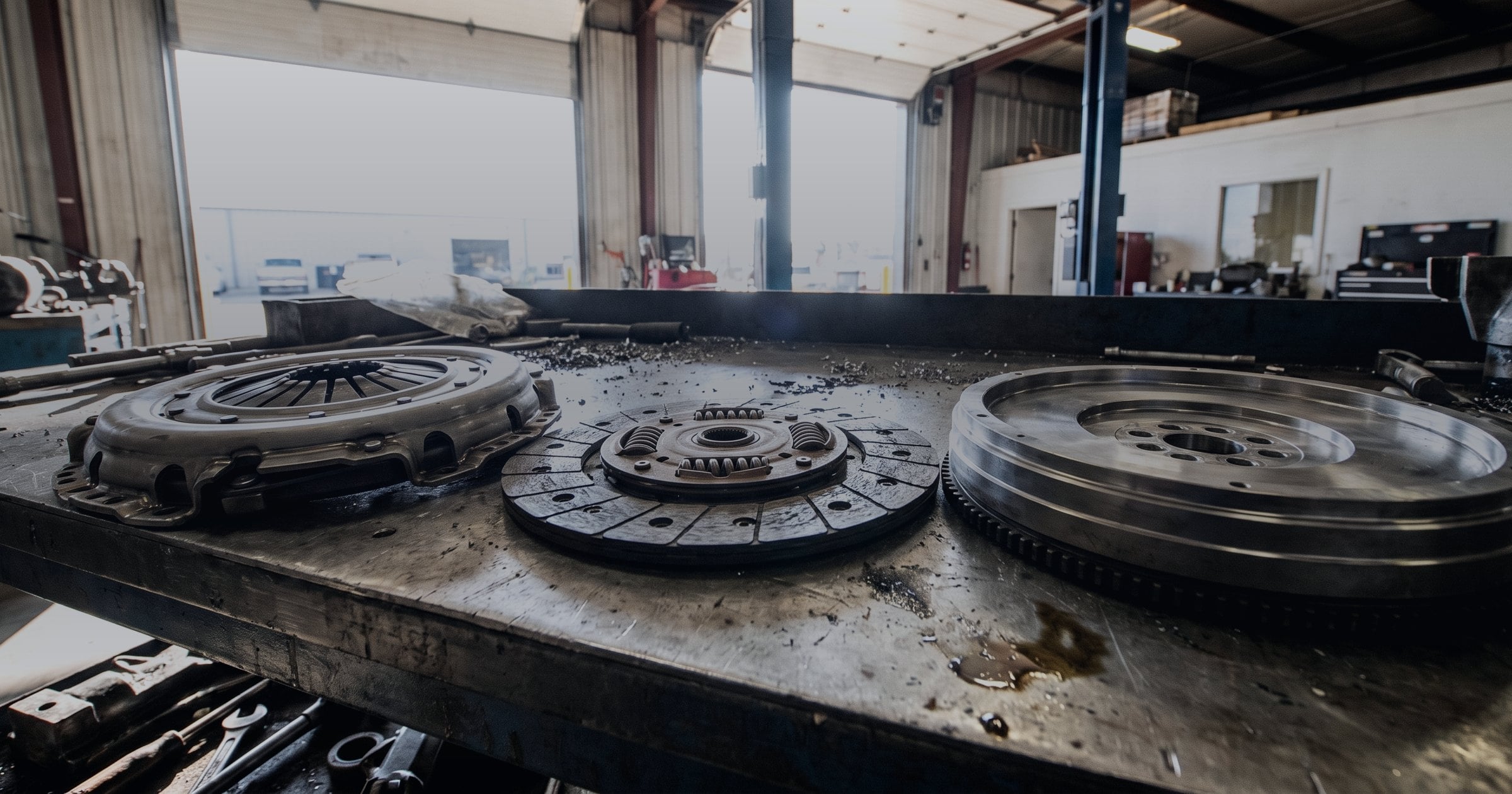
An organic facing is a full faced disc made from a bonded compound, often with copper in it. It grips smoothly as the pressure plate loads it, which is why organic is still the default for road vehicles.
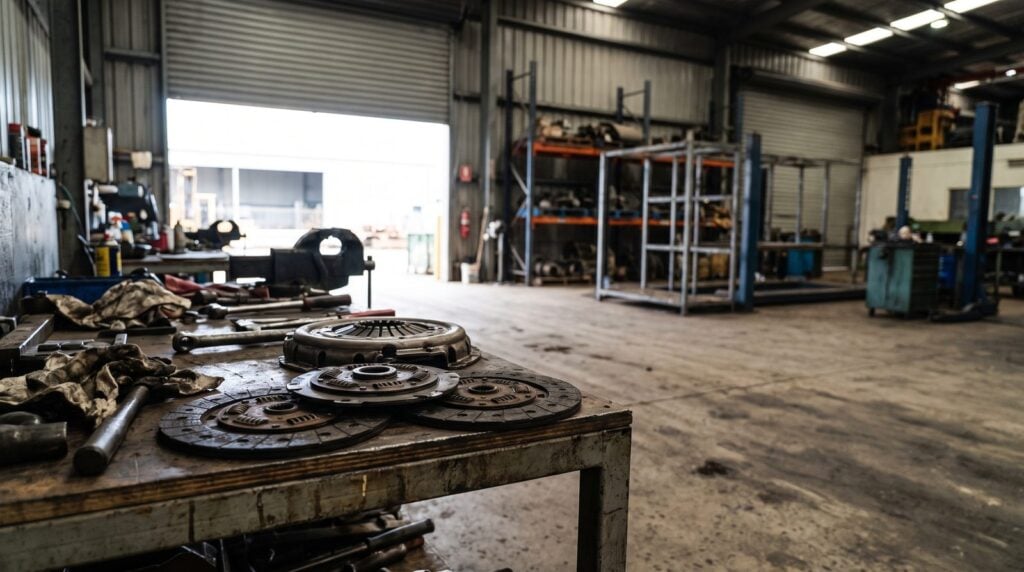
A ceramic facing uses sintered ceramic pads. It grips harder and takes far more heat. NPC does it two ways. A cushioned ceramic disc has a sprung cushion behind the facing to soften the take up. A button ceramic disc swaps the full facing for a few raised pads, which puts more load on each pad and makes it grab much more sharply.
A multi friction setup carries both materials. NPC sells twin plates with a coppermix organic disc paired with a button disc. They’re listed for petrol V8s and turbo sixes, the Falcon, Mustang GT and Commodore, not for diesel 4WDs.
For a diesel 4WD that still gets driven to work, go organic first. Cushioned ceramic only if organic won’t hold. Button ceramic only once the vehicle has stopped being a daily driver. NPC says the same on its own race product, and warns that its twin plate sprung button package isn’t meant for everyday use.
Single plate or twin plate
A twin plate clutch has two friction discs with a steel plate between them. Double the friction area lets it hold far more torque, at a similar or lower pedal effort than a single plate the same size.
A twin plate package replaces the flywheel, so it’s a bigger job with more parts. It’s also noisier. On the diesel Hilux package NPC says pedal effort stays comfortable, but engagement is more aggressive than stock and you’ll get intermediate plate rattle with the clutch pedal down. That rattle is normal for the design. It isn’t a fault.
A single plate keeps the factory flywheel on the entry kits and engages progressively on an organic facing. For a daily driven diesel that’s usually the right answer.
Dual mass flywheels
A dual mass flywheel is a two part flywheel with springs and a damper between the halves. Makers fit it to soak up diesel vibration before it reaches the gearbox. It works well and it wears out. When it does you get rattle at idle, shudder on take up and sometimes a knock on shutdown. Which way to go depends on the vehicle, not on which is cheaper.
Replace like for like. NPC sells a genuine replacement kit with the factory fitted dual mass flywheel and an organic clutch. Part 7235DMF is listed for the GU Y61 Patrol ZD30 built 04/00 to 07/04, and NPC notes the flywheel must be machined before the new kit goes in. You keep the factory feel and service life.
Convert to a solid flywheel. NPC makes its dual mass to solid conversion flywheels in Queensland. A solid flywheel gets rid of a known wear item, but it also gets rid of the damper, so expect more driveline noise than the factory setup made.
Leave it alone. If the flywheel is sound and only the disc is worn, change the disc. Have the flywheel checked for rock and excess play while the gearbox is out. That check is the only reliable way to decide.
Matching capacity to your actual torque
This is where most money gets wasted. Owners buy the biggest number in the range and then live with a pedal and a take up they didn’t want.
Work from what the engine makes now. On the VDJ76, VDJ78 and VDJ79 LandCruiser built 03/07 on, the entry NPC Stage 1 heavy duty organic is already rated 800Nm at the wheels. It has 1,180kg of clamp force, keeps the factory flywheel, and NPC says pedal effort is about a third heavier than factory.
| NPC kit, VDJ76, VDJ78 and VDJ79 LandCruiser | Rated capacity, as NPC labels it | Flywheel |
|---|---|---|
| NPC7751-1A Stage 1 Heavy Duty Organic | 800Nm maximum measured at the wheels, 1,180kg clamp force | Factory flywheel retained |
| NPC7751-1C Super Heavy Duty Organic 1300 | 1300Nm maximum measured at the wheels | Requires NPC flywheel, not supplied |
| NPC7751-1D Super Heavy Duty Organic 1300 | 1300Nm calculated at the flywheel | Billet steel flywheel supplied |
| NPC7751-1D/1 Super Heavy Duty Organic 1600 | 1600Nm calculated at the flywheel | Billet steel flywheel supplied |
Be careful where your torque number comes from. The 1VD-FTV in the 70 Series utes and wagons is a single turbo 4.5 litre V8. The 200 Series has the twin turbo version of the same engine code, rated at 195kW and 650Nm. Don’t carry the 200 Series figure across when you size a clutch for a 70 Series. Use your own dyno sheet.
Pick the lowest rated kit that clears your measured torque with some headroom, then stop. You want the headroom because towing and low range multiply the load. A kit rated at double your output only gets you a heavier pedal and a sharper take up. If the engine has had a tune or other work, size the clutch from a fresh dyno figure taken after it, not from what it made before.
Wheel and flywheel torque ratings
NPC doesn’t label capacity the same way across its own range. The 7751-1A reads “Maximum Measured Dyno Figures at the Wheels: 800nm” and the 7751-1C uses the same wording at 1300nm. The 7751-1D has the same 1300 in its name but reads “Calculated Maximum Dyno Figures at the Flywheel: 1300nm”. The STP47S Hilux twin plate reads “Torque Rating at the Flywheel: 2000nm”. Some other listings quote rear wheel horsepower instead.
Driveline losses sit between the wheels and the flywheel, so a 1300 rating at the wheels and a 1300 rating at the flywheel cover different amounts of engine torque. NPC doesn’t publish a conversion between the two. That doesn’t make any of the ratings wrong. It means you have to check which one you’re reading.
- Don’t compare brands on the headline number alone. Ask each supplier where their figure is taken.
- Don’t assume the same number means the same kit. The 1C and the 1D both say 1300. The real difference is that one comes with the billet steel flywheel and one doesn’t.
- Match the rating to how your torque was measured. If your tuner gave you a wheel figure off a chassis dyno, compare it with a wheel rated clutch.
What NPC clutches cost
These are our prices for new, genuine NPC kits. Fitting, gearbox removal and any bleeding or adjustment are on top.
| NPC kit | Fits | Price |
|---|---|---|
| NPC7751-1A Stage 1 Heavy Duty Organic, factory flywheel | VDJ76, VDJ78, VDJ79 LandCruiser | $985.00 |
| NPC7751-1C Super Heavy Duty Organic 1300, flywheel not included | VDJ76, VDJ78, VDJ79 LandCruiser | $1,135.00 |
| NPC7751-1D Super Heavy Duty Organic 1300 clutch and flywheel | VDJ76, VDJ78, VDJ79 LandCruiser | $1,820.50 |
| NPC7751-1D/1 Super Heavy Duty Organic 1600 clutch and flywheel | VDJ76, VDJ78, VDJ79 LandCruiser | $2,215.00 |
| STP47S twin plate sprung button package, 2000Nm at the flywheel | KUN16 and KUN26 Hilux | $3,025.00 |
| 7235DMF factory dual mass flywheel and organic clutch replacement | GU Y61 Patrol ZD30, 04/00 to 07/04 | $3,627.70 |
The dearest kit isn’t the strongest one. The Patrol dual mass replacement costs more than the 2000Nm Hilux twin plate, and what it buys is a factory grade damper, not more holding capacity. They’re for different vehicles, so don’t read them as two quotes for the same job.
Don’t skimp on the small parts either. Slave cylinders, like the GQ Patrol 3/4 bore unit at $60.50 or the 3.5 litre V6 Jackaroo and Rodeo unit that also suits the Colorado and D-MAX at $93.50, cost little next to a clutch. Reusing tired ones is the most common reason a good clutch job gets opened up twice. The rest is under transmission parts.
Common questions
Do I need an NPC performance clutch or just a replacement?
Standard engine and a worn clutch means a like for like replacement. Upgrade when torque has really gone up, like after a tune or an injector and pump upgrade, or when you now tow heavy or run bigger tyres. Capacity you don’t need costs you pedal weight and a smooth take up.
What torque can an NPC clutch hold?
It depends on the kit. For the VDJ76, VDJ78 and VDJ79 LandCruiser, NPC rates the entry organic at 800Nm at the wheels, the 1C at 1300Nm at the wheels, and the 1D and 1D/1 at 1300Nm and 1600Nm at the flywheel. The Hilux twin plate is rated 2000Nm at the flywheel. Check where each figure is measured before you compare them.
Is a ceramic clutch a bad idea for a daily driven 4WD?
A button ceramic usually is. Cushioned ceramic has a sprung cushion behind the facing and NPC pitches it at high performance street use. Button ceramic is pitched at competition and hard road use, and it bites far more sharply. If the vehicle does the school run, stay with organic unless it won’t hold.
Should I convert my dual mass flywheel to a solid one?
Only if you want to get rid of the wear item and can live with the noise. The dual mass flywheel damps diesel vibration, so taking it out means more gearbox rattle at idle. Both a solid conversion and a factory replacement are available. Get the flywheel checked while the gearbox is out and decide then.
How long does an upgraded clutch last?
There’s no useful kilometre figure. Load and driving style decide clutch life far more than the part does, and towing, low range and stop start traffic all shorten it. What matters is whether the kit is rated right for your torque. An underrated clutch slips and cooks itself long before it wears out.
Get the right NPC clutch for your vehicle
Clutch choice goes wrong at the ordering stage far more often than at fitting, and the two things that decide it, your real torque figure and how the vehicle is used, aren’t on the product page. Send us your vehicle, build date, gearbox and any tune details through our contact page and we’ll confirm the right kit and flywheel before you order. Our founder Willy has more than 20 years on the tools as a heavy diesel mechanic, and the team works on diesels across our Brisbane and Sunshine Coast workshops.
Last updated: September 2026