
 By Willy · Founder & Lead Diesel Specialist
Willys Workshop · Oxley & Warana · 20+ years hands-on diesel experience
The 1HD-FTE is Toyota’s 4.2 litre turbo diesel six. In the 100 Series LandCruiser it makes 151kW at 3400rpm and 430Nm from 1400 to 3200rpm. In the 78 and 79 Series it makes 122kW and 380Nm, because that version runs a lower compression ratio and was supplied without an intercooler.
That difference is where most 1HD confusion starts. This guide separates the 1HD-T, the 1HD-FT and the 1HD-FTE, sets out which Australian vehicles got which, explains what wears out, and covers what the parts cost. If you already know what you’re after, our turbo kits and turbochargers are the quickest place to start.
Quick Links
- What the 1HD-FTE is
- 1HD-T, 1HD-FT and 1HD-FTE compared
- Australian vehicles
- Specifications
- The 79 Series 1HD-FTE versus the 100 Series
- Common 1HD-FTE problems
- When a rebuild is worth doing
- What 1HD parts cost
- Upgrade order if you’re keeping it
- Buying a used 1HD
- Common questions
What the 1HD-FTE is
Cast iron block, cast iron head, inline six, direct injection, single overhead cam and four valves per cylinder. It’s based on the earlier 1HD-FT, with an electronically controlled injection pump and an intercooler added.
The bottom end is built heavy. It has a forged crank with seven journals and twelve balance weights, a ladder type bearing cap, and carbon steel conrods with tapered small ends. The aluminium alloy pistons have the top ring groove treated with metal matrix composite for wear resistance.
The electronically controlled injection pump still meters and pressurises fuel mechanically, but it takes its timing and delivery commands from the ECU. That’s why people mistake it for common rail. It isn’t. The pump stays mechanical, and only injection timing and volume are under electronic control.
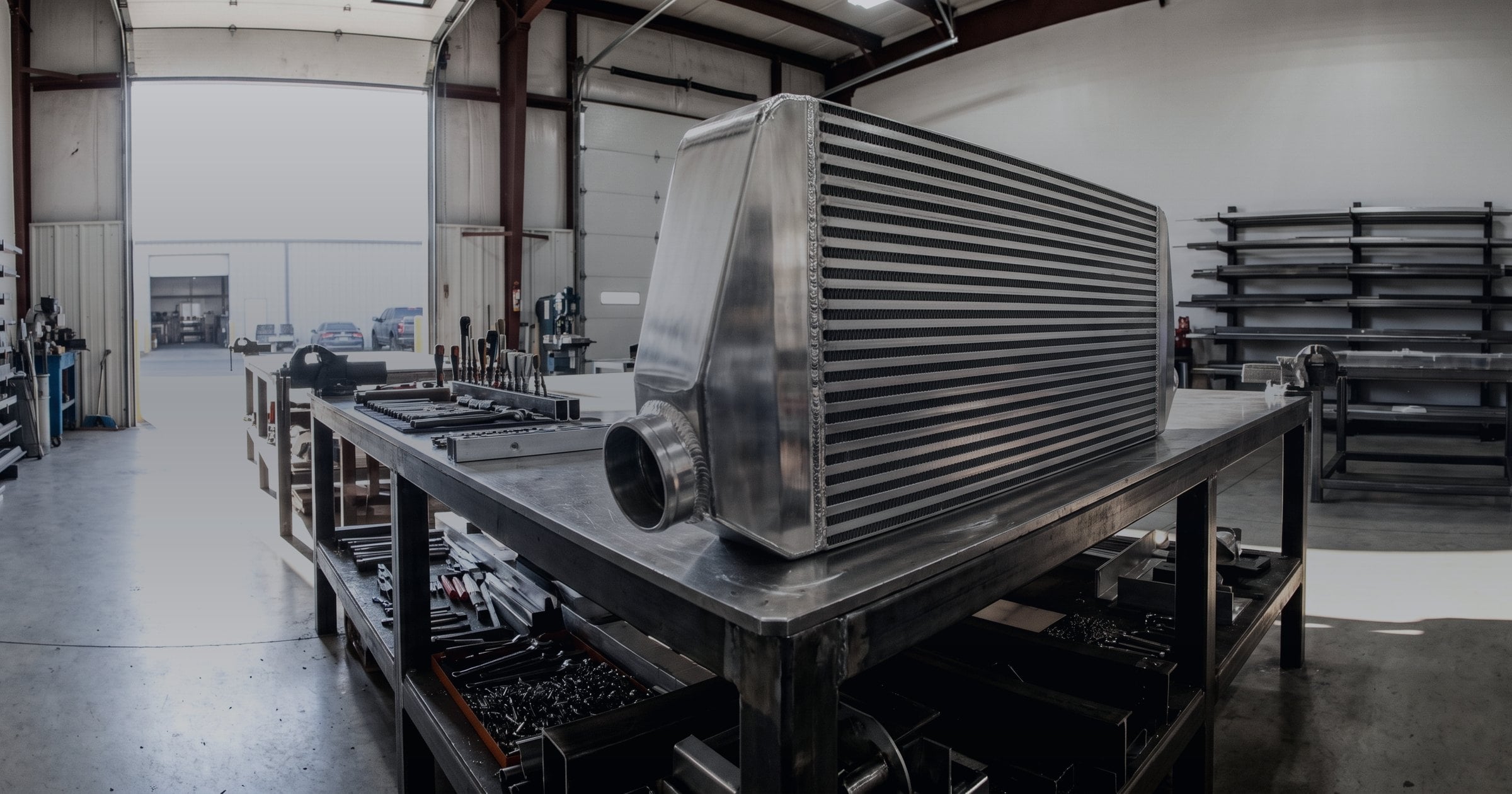
The intercooler cools the air coming off the turbo before it reaches the inlet manifold. On this engine it’s a simple air to air unit, and it’s the biggest hardware difference between the two Australian versions.
1HD-T, 1HD-FT and 1HD-FTE compared
People say “1HD” like it’s one engine. It’s three, and they differ in valve count, fuelling and output. Mixing them up is how the wrong parts get ordered.
| Engine | Valves | Vehicle and years | Power | Torque | Intercooled |
|---|---|---|---|---|---|
| 1HD-T | 12 | 80 Series, 1990 to 1992 | 122kW at 3600rpm | 361Nm at 1400rpm | No |
| 1HD-FT | 24 | 80 Series, 1992 to 1998 | 125kW at 3600rpm | 380Nm at 2500rpm | No |
| 1HD-FTE | 24 | 100 Series, October 2000 to 2007 | 151kW at 3400rpm | 430Nm at 1400 to 3200rpm | Yes |
| 1HD-FTE | 24 | 78 and 79 Series, 2002 model year on | 122kW at 3400rpm | 380Nm at 1400 to 2600rpm | No |
The 12 valve 1HD-T only lasted about two years in the 80 Series. The short run is put down to surging and poor idle, and more seriously to eating its bottom end bearings, with many owners reportedly replacing them around every 100,000km. Treat that as a buying caution.
The 1HD-FT got the 24 valve head but moved its torque peak up to 2500rpm, against 1400rpm on the 12 valve. That’s why an FT can feel softer off idle than the older engine, even though it’s stronger on paper. The FTE fixed that. Its 430Nm is spread across a band from 1400rpm, and it drives like a much bigger engine.
Australian vehicles
It wasn’t in the 100 Series at launch. The 100 Series arrived in 1998 with a 4.2 litre naturally aspirated diesel, a 4.5 litre petrol six and a 4.7 litre petrol V8. The turbo diesel six didn’t turn up until October 2000.
The 105 Series was sold alongside the 100, and it got the naturally aspirated 1HZ (96kW and 285Nm), not the 1HD-FTE. A listing that says “100 Series 4.2 diesel” may well be a 105 with a 1HZ, so check the model code before you buy parts.
Production finished in 2007. The inline six couldn’t meet the Euro IV emissions rules that applied that year, and Toyota replaced it in the 70 Series with the 4.5 litre V8 turbo diesel.
Specifications
| Specification | Value |
|---|---|
| Configuration | Inline six, cast iron block and cast iron head |
| Displacement | 4,164cc |
| Bore x stroke | 94.0mm x 100.0mm |
| Compression ratio | 18.8:1 (100 Series) |
| Valvetrain | SOHC, four valves per cylinder |
| Head gasket | Three layer steel laminate |
| Fuel system | Radial plunger, electronically controlled injection pump, direct injection |
| Turbocharger | Toyota CT20B (100 Series) |
| Firing order | 1-4-2-6-3-5 |
| Redline | 4000rpm |
These are 100 Series figures. The 78 and 79 Series engine runs lower compression and no intercooler. Confirm against your build plate and engine number before ordering.
The 79 Series 1HD-FTE versus the 100 Series
Both carry the same engine code, but the outputs are 29kW and 50Nm apart. The 78 and 79 Series got a lower compression version of the 100 Series engine, without its intercooler, from 2002. That has three practical effects.
Most 1HD-FTE performance figures you’ll find online are 100 Series numbers. A 79 Series owner comparing their ute against 151kW is comparing it with an engine they don’t have. Nothing’s wrong with the ute.
The missing intercooler is real hardware. That’s why a 70 Series intercooler kit is one of the more sensible early upgrades on that vehicle, and a waste of money on a 100 Series that already has one. Cooler intake air means lower exhaust gas temperature for the same fuel, and on a work ute towing in Queensland heat that counts for more than the power figure.
Both the 1HD-T and the 78/79 Series 1HD-FTE make 122kW, the first at 3600rpm and the second at 3400rpm. Classifieds quote the number without the rpm, so “122kW 4.2 turbo diesel” doesn’t tell you which one it is. Go by the vehicle, the year and the engine number.
Common 1HD-FTE problems
These are the jobs that bring a 1HD onto the hoist, roughly in the order you’ll meet them.
Injectors and the injection pump
It injects through two stage nozzles sitting upright over the centre of each bore. They’re precision parts and they wear, and so do the seals and washers around them.
There’s no set kilometre figure for injector life, so go by the symptoms. White or grey smoke on start up that’s slow to clear, a rough idle that smooths out as it warms, harder cold starts and fuel use creeping up with no change in driving all point at injectors. A ticking at the head usually means a seat washer is leaking.
The pump is the expensive half. Because timing and volume are electronically controlled, a fault can sit in the pump, in a sensor feeding the ECU, or in the wiring between them. Have the system tested before you replace the pump on a guess.
Cylinder head and gasket condition
The 1HD family has a reputation for head trouble. What we see on the bench is heat damage, and heat has causes you can control.
Toyota enlarged the water jacket around the exhaust valves and injector nozzles over the 1HD-FT, which tells you where the heat builds up. A tired radiator, old coolant, a blocked intercooler on a 100 Series, or extra fuel without a matching exhaust all work on those areas.
If you suspect the head, the tests are the same as on any diesel: a cooling system pressure test, a combustion gas test on the coolant, a compression test and a leak-down test.
EGR and intake fouling
Exhaust gas recirculation (EGR) feeds a measured amount of exhaust back into the intake to lower combustion temperature and cut oxides of nitrogen. On the 1HD-FTE the ECU runs it through a vacuum regulating valve.
That exhaust carries soot. Mixed with oil vapour from the crankcase breather, it builds a hard deposit through the EGR pipework and the inlet manifold. It comes on slowly, so owners rarely notice. Power drops off, fuel use creeps up, and it feels flat off idle.
Short trips make it worse. A Troopy doing town work never runs hot for long enough to stay clean. The same vehicle on long highway runs stays much tidier at the same kilometres.
Turbo, heat and boost
Turbos on these engines usually fail for a reason, not from age. The reason is almost always oil supply, a restricted oil drain, or long periods of high exhaust gas temperature. Find out why the first one died before you buy another. A new turbo on a blocked drain or a tired oil feed just fails again.
When a rebuild is worth doing
If the bottom end is healthy, fix the one fault. A leaking injector, a fouled inlet or a turbo that died from an oil supply problem are repairs. Sort the cause, replace the part, and the engine keeps going for years.
A rebuild makes sense when the tests say the bores and bearings are done. Low compression across several cylinders, blow-by out the oil filler, oil use with no external leak, or a knock that comes up under load all point the same way, and no injector set fixes that. An 80 Series 1HD-T with no record of bearing work belongs in the same conversation.
A second hand engine costs less on the day, but you get the same unknown history, the same bearing question and no test results. And if the chassis, gearbox and body all want money too, it may be time to move the vehicle on.
Our engine rebuild kits for the 1HD-FTE include a piston set, a ring set, main and conrod bearings, thrust washers, cam bearings, a full gasket set, the head gasket and head bolts. The high performance kit adds ceramic coated pistons and ACL Race main and conrod bearings.
Neither 1HD-FTE kit has timing parts. This engine wants a timing belt every 150,000km, so order one separately and do it while the front of the engine’s apart. There’s no cylinder head, injectors, turbo, oil pump or water pump in the box either, and conrod bolts are a separate line. A kit is a parts price. Machining, labour and head work sit on top, so the finished job costs several times the kit, and we quote it once we’ve seen the block and head.
A 1HD-T kit won’t rebuild a 1HD-FTE. Check the engine number stamped on the block before you order. Kits are also ordered by machining size, which comes from your machinist once the engine’s stripped. If STD, 0.25 and 0.50 don’t mean anything to you yet, our guide to bearing and piston sizes explains what to send us.
What 1HD parts cost
These are starting prices for parts only. Fitting and setup are on top. Check the engine code on every line, because this covers the whole 1HD family.
| Rebuild kit | 1HD-T | 1HD-FT | 1HD-FTE |
|---|---|---|---|
| Standard kit | from $1,210 | from $2,163.40 | from $1,972.40 |
| Performance or high performance kit | from $1,976.57 | from $2,474.40 | from $2,353.40 |
Other parts from this guide:
- Front mount intercooler, 70 Series 1HD-FTE: from $1,735
- Intercooler, 100 Series 1HD-FTE: from $1,230
- Front mount intercooler, 80 Series 1HD-FT 24V: from $1,630 (doesn’t fit a 1HD-FTE)
- Turbo kit, 100 Series 1HD-FTE: from $4,600
- 3 inch turbo back exhaust, HDJ79 ute: from $1,620.73
- 3 inch turbo back exhaust, HDJ100 wagon: from $1,400.19
- 3 inch turbo back exhaust, HDJ80 wagon: from $1,495.52
The small genuine parts matter more than their price suggests. Injector O-rings, return washers, hold down bolts and head bolt washers are the bits most often reused to save a few dollars, and reusing them is the most common reason a 1HD job gets done twice.
Upgrade order if you’re keeping it
- Fix what’s worn first. Injectors, pump health, a clean intake and a sound cooling system. There’s no point adding fuel to an engine that can’t breathe or get rid of heat.
- Cooling and airflow. On a 78 or 79 Series that means an intercooler, because the factory never fitted one. On a 100 Series it means checking the one you’ve got is clean and the radiator’s up to it.
- Exhaust. A freer system lowers exhaust gas temperature. On this engine that’s worth more than the power figure suggests, because heat is what damages turbos, manifolds and head gaskets.
- Tune last. With healthy hardware in place, a tune is where the drivability gain is, mostly in how it holds torque under load. A tune laid over a mechanical fault hides it until it lets go, often halfway up a range with a van on the back.
Buying a used 1HD
- Confirm which engine it has. Go by the engine code and the model code, not the seller’s description. A 105 Series is a 1HZ, not a 1HD-FTE.
- Service history. The 1HD-FTE needs a timing belt every 150,000km, and fresh oil and a filter every 5,000km. Be wary of one that hasn’t been serviced to that pattern.
- Cold start. Smoke that hangs around instead of clearing points at the injectors.
- Compression and leak-down test. The direct check on head and bore condition, and cheap next to what it can save you.
- Cooling system. Coolant, radiator, and on a 100 Series the state of the intercooler.
On an 80 Series 1HD-T, budget for bottom end bearings until you’ve got proof they’ve been done. Run the VIN through the PPSR for finance owing and stolen or written-off status, and check the model on the recall register at Product Safety Australia.
Common questions
Is the 1HD-FTE a good engine?
Yes, and it has a strong following. Plenty of owners rate it above the 4.5 litre V8 that replaced it. It still needs its service intervals kept, particularly the 5,000km oil changes.
What is the difference between the 1HD-T, 1HD-FT and 1HD-FTE?
The 1HD-T is the 12 valve engine in the 1990 to 1992 80 Series. The 1HD-FT is the 24 valve engine in the 1992 to 1998 80 Series, without an intercooler. The 1HD-FTE added electronic control of the injection pump plus, in the 100 Series, an intercooler, and makes 151kW and 430Nm there.
Is the 1HD-FTE a common rail engine?
No. It uses a mechanical injection pump. What changed over the 1HD-FT is that the ECU controls injection timing and volume, where the older engine did it mechanically.
Why is my 1HD-FTE blowing white smoke on start up?
Most often a worn or leaking injector, or a failed seal or washer under one. If the smoke hangs around instead of clearing as it warms, have the injectors tested before you replace them on a guess.
Can I fit a bigger turbo to a 1HD-FTE?
You can, but it’s rarely the right first move. Sort the injectors, the intake and the cooling first, and on a 78 or 79 Series fit the intercooler the factory left off. Most people who put a bigger turbo on a tired engine are disappointed, because the turbo was never the restriction.
Work out which 1HD you have before you order
Fitment on these vehicles depends on the model code and build date as much as the engine code. Send your VIN, build date and engine number through our contact page and we’ll confirm the right engine internals, gaskets, intercooler or turbo kit before you order. Our founder Willy has more than 20 years on the tools as a heavy diesel mechanic, and the team works on diesels across our Brisbane and Sunshine Coast workshops.
Last updated: October 2026