
 By Willy · Founder & Lead Diesel Specialist
Willys Workshop · Oxley & Warana · 20+ years hands-on diesel experience
The P5AT is Ford’s 3.2 litre five cylinder Duratorq turbo diesel. In Australia it went into the PX Ranger, the Mazda BT-50 and the UA Everest between 2011 and 2022. It makes 147kW at 3,000rpm and 470Nm in the utes, and 143kW in the Everest. It’s a strong, long legged engine with four known faults.
This guide covers what the engine is, what actually fails, when a rebuild makes sense, and what the parts cost. If you’re already chasing a specific job, we have a separate breakdown of Ford Ranger 3.2 injector costs and symptoms.
Quick Links
- What the P5AT is
- Australian vehicles and outputs
- The four faults that bring one in
- How long the injectors last
- When a rebuild is the right call
- What P5AT parts cost
- Upgrade order if you’re keeping it
- Buying a used 3.2
- Common questions
What the P5AT is
The 3.2 Duratorq is an inline five with a cast iron block, aluminium head, double overhead cams, four valves per cylinder, forged conrods and 15.7:1 compression. Fuel goes in through common rail direct injection with piezo injectors, and boost comes from a single variable geometry turbo. Every version has exhaust gas recirculation. Diesel particulate filter fitment varies by build date, and the UA Everest also used AdBlue to meet Euro V.
A variable geometry turbo has movable vanes in the turbine housing that change how the exhaust hits the turbine wheel. That lets it build boost early without the lag of a fixed vane unit, which is most of why a 3.2 pulls a loaded trailer the way it does.
Piezo injectors use a stack of piezoelectric crystals that change shape under voltage to move the needle, where older injectors use a solenoid. The stack moves faster and more precisely, so the engine can fit several injection events into one combustion stroke. The catch is very tight tolerances, so fuel quality and filter changes matter more here than on an older mechanical diesel. And five cylinders means five of everything when the injectors come out.
Australian vehicles and outputs
| Vehicle | Years | Peak power | Peak torque |
|---|---|---|---|
| Ford PX.I Ranger | 2011 to 2015 | 147kW at 3,000rpm | 470Nm at 1,500 to 2,750rpm |
| Ford PX.II and PX.III Ranger | 2015 to 2022 | 147kW at 3,000rpm | 470Nm at 1,750 to 2,500rpm |
| Mazda UP and UR BT-50 | 2011 to 2020 | 147kW at 3,000rpm | 470Nm at 1,750 to 2,500rpm |
| Ford UA and UA.II Everest | 2015 to 2022 | 143kW at 3,000rpm | 470Nm at 1,750 to 2,500rpm |
The Everest is 4kW down on the Ranger and BT-50 with the same engine and platform. That’s a rating difference, not a sign of a tired engine. The 3.2 also kept going after the 2018 facelift. The UA.II Everest of September 2018 added a 2.0 litre biturbo four, but the 3.2 stayed in the range at 143kW and 470Nm through to 2022.
Look at the torque band too. The PX.I holds peak torque over 1,250rpm, the PX.II and PX.III over 750rpm. The peak figure never changed, so the spec sheet hides it, but the early ute has 500rpm more of usable plateau. The PX.II also brought an updated exhaust gas recirculation system, so order parts by build date, not the model year on the rego papers.
The four faults that bring one in
These are in the order you’re most likely to meet them, not in order of how bad they are.
Injectors
This is the number one 3.2 job. Leaking injectors show up on the PX Ranger 3.2 TDCi from as little as 70,000km. The signs are a rattle from the engine, misfires, a surging or uneven idle, and higher fuel use. If enough fuel leaks into a cylinder, the misfire can damage the piston, to the point of melting it or blowing a hole in the top. Remanufactured injectors may last half as long as new ones, and the injector seats can be re-cut while they’re out.
Do them as a set. Replace one, leave four tired ones, and it’ll still run unevenly and you’ll get a second bill a few months later.
EGR cooler failure
The EGR cooler uses engine coolant to cool the recirculated exhaust gas before it goes back into the intake. On the PX Ranger it sits at the back of the engine with two coolant lines into it, and it’s prone to splitting internally.
A split cooler leaks coolant, and the engine can overheat and blow the head gasket. Coolant can also get into the exhaust manifold or the combustion chambers, which can bend conrods or crack the head. Check the coolant level regularly, and have the EGR cooler pressure tested when you buy one. If the level keeps dropping and there’s no puddle under the ute, that’s where to look.
Oil pump priming after an oil change
This one is about procedure, not design, and getting it wrong can wreck the engine. The 3.2 has a chain driven variable flow oil pump in the sump. Don’t leave the oil draining for more than 10 minutes, because oil can run out of the pump assembly as well as the sump. The pump may then fail to re-prime, the engine isn’t properly lubricated on start up, and revving it won’t re-prime it. After refilling and starting, the oil light should go out within five seconds.
So the old habit of leaving the sump plug out overnight to get the last of the oil is exactly wrong on a P5AT.
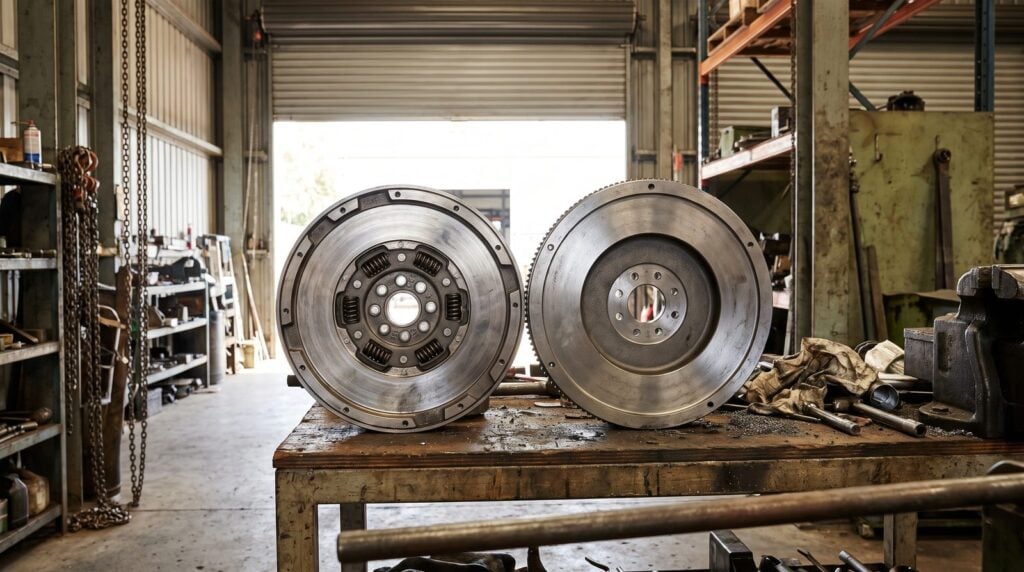
Dual mass flywheel and clutch wear
A dual mass flywheel is split into two masses joined by springs, to soak up the pulses a diesel sends into the gearbox. On PX Ranger 2.2 and 3.2 manuals it can wear the clutch faster, with a pulsing pedal, shudder from rest and trouble shifting from first to second. Dual mass units are less durable than solid flywheels and don’t like high torque and towing, which is why a solid flywheel conversion is a common change on turbo diesels.
If you tow heavy, plan for the clutch and flywheel. Our NPC performance clutch guide covers choosing between a like for like replacement and a solid flywheel conversion.
A fifth fault is less common. The PX Ranger and the Mk.2 BT-50 have been reported going into limp mode on fuel temperature readings above 80 degrees, where normal is 40 to 60. The suggested causes are a sticking piston in the injection pump, or a kinked fuel return line after a long range tank has been fitted.
How long the injectors last
You’ll hear three different numbers for P5AT injector life. They answer different questions.
| Figure | Where it comes from | What it means |
|---|---|---|
| Leaks from 70,000km | Field reports | The earliest reported failures, not a typical life |
| Replace every 100,000km | Workshop practice | A precautionary interval, set below the failure point on purpose |
| 150,000km to 200,000km | Our two workshops | What a well serviced engine on clean fuel returns |
We see these engines apart, so our number is the one we stand behind. With fuel filters done on time and no dodgy fuel in its history, 150,000km to 200,000km is realistic. The early failures nearly always share a cause, usually a stretched filter interval.
The 100,000km figure isn’t wrong. It’s a precautionary interval, set below where failures start, which is why it sits near that earliest 70,000km report. Treat it as a life expectancy and you’ll replace a healthy set of five.
Go on condition, not kilometres. A 2013 PX.I on 170,000km with a clean idle, steady fuel use and a full filter history doesn’t need injectors on principle. The same ute with a top end rattle at 90,000km does.
When a rebuild is the right call
Caught late, three of the four faults end up in the same place. A leaking injector can melt or hole a piston. A split EGR cooler can overheat the engine badly enough to bend conrods or crack the head. An oil pump that doesn’t re-prime runs the engine without proper lubrication until something lets go. At that point you’re deciding what to do with the engine, and there are four options.
Repair the single fault when the damage stayed contained. A cooler tested and replaced before it emptied the coolant, or injectors done before a piston got hurt, is the cheapest right answer. Most 3.2s that come in are this job.
Rebuild it when the damage is internal but the block is still good. The P5AT is worth rebuilding more often than most. A cast iron block that can be bored, a crank that can be ground and forged conrods make it worth building up, which is why oversize pistons and undersize bearings are stock items for it.
Buy a used engine when you want the vehicle back quickly and can accept unknown history. The donor has its own injector and EGR cooler history, and those are the two things that killed yours. Pressure test the cooler on the replacement before it goes in.
Move the vehicle on when the rest of it is as tired as the engine. If the gearbox, clutch and body all want money too, the build can get close to what the ute is worth.
What is in a rebuild kit
There are two engine rebuild kits for the P5AT, a standard NVP kit and a high performance one. Both are listed against the engine, so the same kit covers the PX Ranger and the BT-50.
- Standard kit, with timing. Piston and ring STD, 0.075, 0.50, 0.75 or 1.00. Main bearing STD or 0.25. Conrod bearing STD, 0.25 or 0.50.
- High performance kit. Piston and ring STD or 0.50. Main bearing STD or 0.25. The listing doesn’t say whether timing is included, so ask us before you order.
A kit is parts in a box. Machining, labour and usually a cylinder head all go on top, and the finished job costs several times the kit. We can’t put a number on that until the engine is apart, so it’s a quote every time. Neither kit includes a head. The listings don’t itemise their contents either, so send us your engine code or VIN and we’ll confirm what’s in the box before you order.
Kits are ordered by machining size, which your machinist gives you once the engine is stripped. If STD, 0.25 and 0.50 don’t mean anything to you yet, our guide to bearing and piston sizes explains them.
What P5AT parts cost
These are our prices, including parts listed under the BT-50 and Everest. Fitting and coding are on top.
| Part | Price |
|---|---|
| Genuine Continental injector, single | $520 |
| Genuine Continental injectors, set of five | $2,400 |
| Genuine Continental high pressure pump, 3.2L and 2.2L P5AT | $1,490 |
| NVP engine rebuild kit, P5AT with timing | from $1,905 |
| NVP high performance engine rebuild kit, P5AT | from $3,031.98 |
| Cylinder head, bare (BT-50 3.2) to genuine assembled (late common rail) | $1,295 to $2,050 |
| Genuine EGR cooler, Ford Mazda P5AT | $764.50 |
| NVP gear drive oil pump set, P5AT and P4AT | $325 |
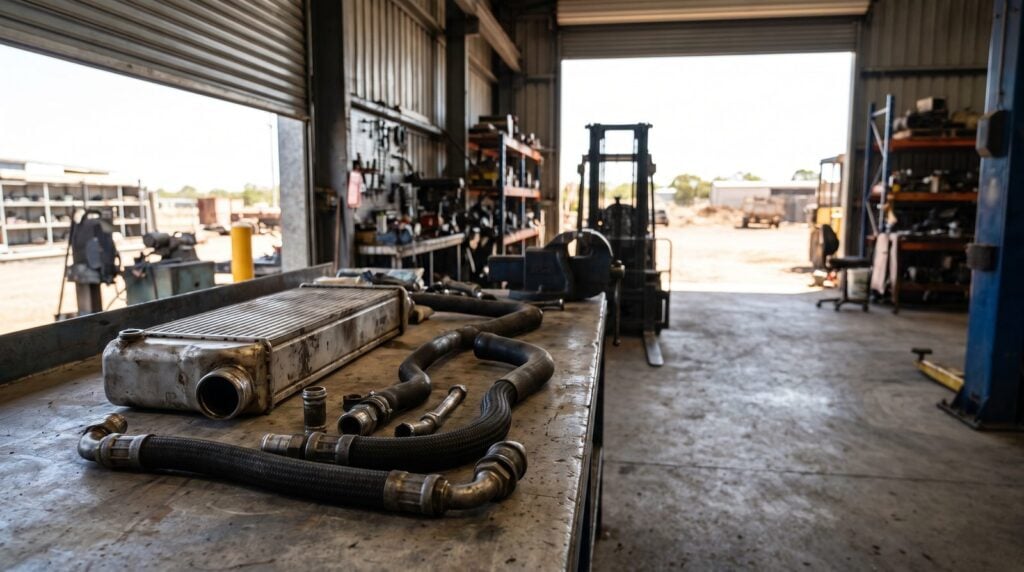
| Intercooler, PX Ranger 3.2 | $1,740 |
| NVP full gasket set, P5AT | $561 |
| Manta turbo back with cat, PX2 and PX3 Ranger 3.2 | $2,619.40 |
A set of five injectors works out cheaper per injector than five singles, which is one more reason to do them as a set. Anything priced well under those figures is usually reconditioned or aftermarket, and reconditioned injectors may last half as long as new. The full ranges are under common rail injectors, pistons, bearings and engine internals and DPF-back exhaust systems.
We don’t currently list a turbo or a dual mass flywheel and clutch kit for the 3.2. If you need either, ask us and we’ll source it.
Upgrade order if you’re keeping it
- Fix what’s worn first. Injectors, EGR cooler, a clean intake and a healthy turbo. There’s no point tuning an engine that can’t breathe or fuel properly.
- Exhaust. A less restrictive system lowers exhaust gas temperature, which matters more on a towing ute than the power figure suggests. Our Manta exhaust buyers guide covers how the system types differ.
- Cooling and airflow. An intercooler upgrade pays for itself in Queensland heat and under load.
- Tune. With healthy hardware, a tune is where the drivability gain is.
Hardware first, tune last. The reason is the injector fault: an engine already leaking fuel into a cylinder doesn’t need more fuel commanded into it. For the wider options, see our guide to Ford Ranger performance upgrades.
If you’ve got a late ute, check the DPF recall. In July 2024 Ford issued recall campaign 24E02 for 2021 to 2022 PX Rangers. A software issue could make the engine produce more soot than intended, so the DPF regenerates more often and the filter can fail. If your 3.2 regenerates more than it used to, check the VIN against that campaign before you spend money on hardware.
Buying a used 3.2
- Pressure test the EGR cooler. It’s the published recommendation, and skipping it has the biggest downside.
- Coolant history. Ask whether the level has ever needed topping up.
- Cold start and idle. Listen for a rattle, watch for a surging idle, and ask about fuel use.
- Clutch feel on a manual. A pulse through the pedal or a shudder off the line points at the dual mass flywheel.
- Oil change records. Proof the work was done properly, given the oil pump priming issue.
Run the VIN through the PPSR for money owing and stolen or written-off status, then check the Product Safety Australia recall register. Ford ran a long list of campaigns in this era, including front brake calliper and hose items, a transmission fluid pump recall and a door latch recall.
Common questions
Is the Ford Ranger 3.2 P5AT a reliable engine?
Yes, if it’s maintained and you know the four faults. The bottom end is strong, with a cast iron block and forged conrods. What brings them in is injectors, EGR coolers splitting internally, dual mass flywheel wear on manuals, and oil pump priming after a badly done oil change. All four are cheaper caught early.
How long do P5AT injectors last?
On a well serviced engine running clean fuel we see 150,000km to 200,000km. The usual advice is to replace them every 100,000km, and leaks have been reported from as little as 70,000km. With a spread that wide the odometer tells you very little, so go on symptoms.
How much power does the 3.2 P5AT make?
147kW at 3,000rpm and 470Nm in the PX Ranger and Mazda BT-50, and 143kW at 3,000rpm and 470Nm in the UA Everest. The PX.I holds peak torque from 1,500rpm. The PX.II and PX.III hold it from 1,750rpm.
Why is my Ranger 3.2 losing coolant with no visible leak?
Check the EGR cooler first. It can split internally and put coolant into the exhaust or the combustion chambers, so none ends up on the ground. Overheating, head gasket failure, bent conrods and a cracked head have all been reported.
Should I convert my P5AT to a solid flywheel?
It’s a common change on turbo diesels, because dual mass units are less durable and don’t like high torque and towing. How you use the vehicle decides it, along with how much driveline noise you’ll put up with. Make the call when the clutch is due.
Check the part against your VIN
Ford changed hardware during production, so fitment is worth checking. Send your VIN and build date through our contact page and we’ll confirm the right part before you order. Our founder Willy has more than 20 years on the tools as a heavy diesel mechanic, and the team works on diesels across our Brisbane and Sunshine Coast workshops.
Last updated: October 2026