

 By Willy · Founder & Lead Diesel Specialist
Willys Workshop · Oxley & Warana · 20+ years hands-on diesel experience
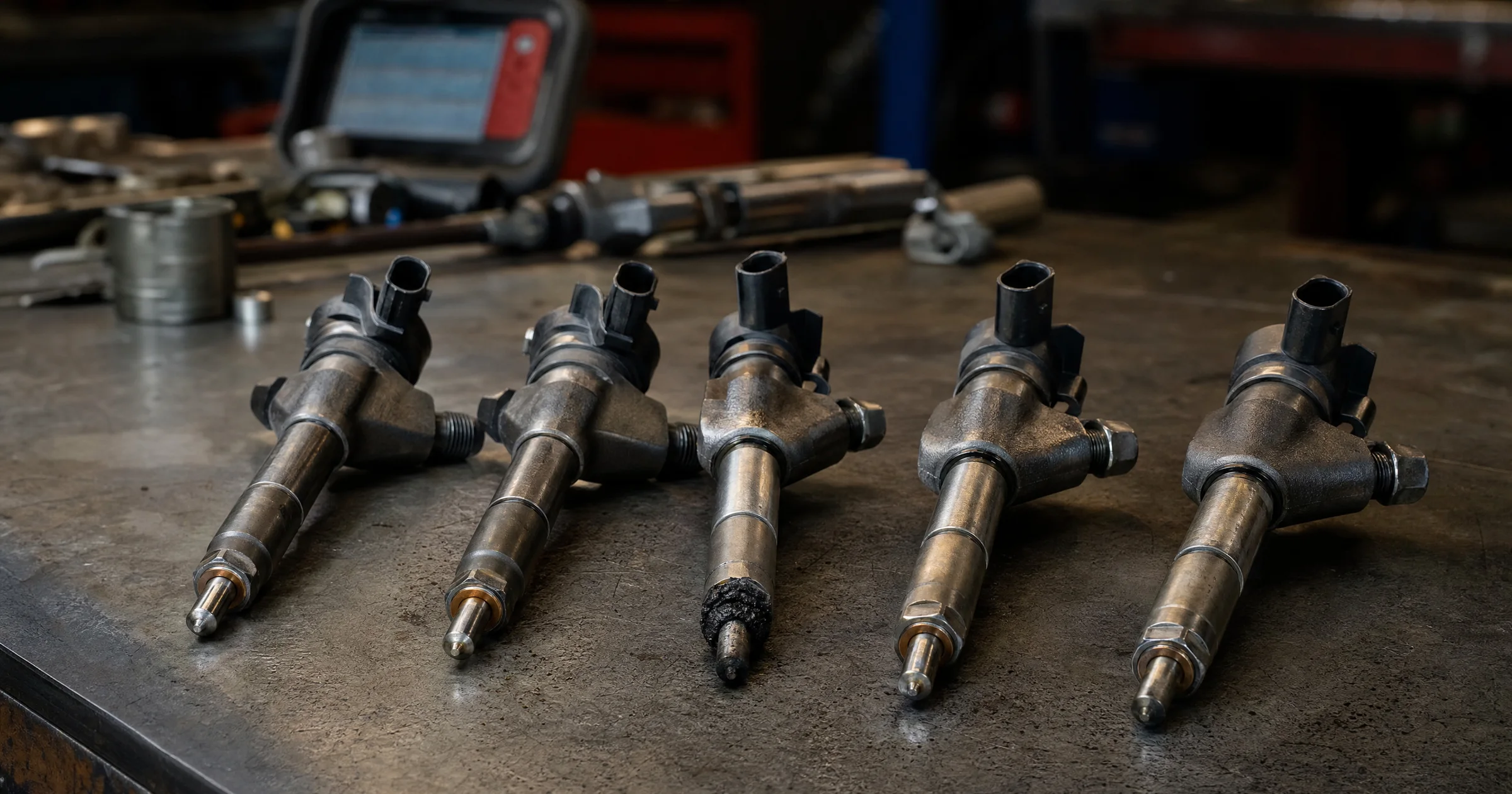
A failing diesel injector shows up the same way almost every time: hard starting, a rough or hunting idle, a knock or rattle that gets worse as the engine warms, smoke out the back, lost power and fuel use that has crept up. One bad injector can cause several of those at once, which is why guessing is expensive and testing is not. Below is the full symptom list, what each one usually points at, when it is safe to keep driving and when it is not, and what a replacement actually costs.
The symptoms of a failing diesel injector
These are the signs we see day in, day out across common-rail utes and 4WDs at both workshops:
- Hard or slow starting, especially first thing on a cold morning, or long cranking before it fires
- A rough, lumpy or hunting idle that smooths out once you are moving
- Diesel knock or rattle, often from one cylinder, that gets louder as the engine warms up
- Black smoke under load, or white smoke at idle and on start-up
- Power loss or hesitation under load, most obvious towing or climbing a hill
- Fuel use going up with no change in how or where you drive
- Limp mode, or a check engine light with cylinder specific injector codes (commonly P0201 through P0206)
- An out-of-range injector balance or compensation reading on one cylinder when a scan tool is plugged in
- A rising oil level and thin, diesel-smelling oil, which means fuel is getting past the rings into the sump
None of these on their own proves the injector is the culprit. Together they build a picture, and a proper test settles it.
What each symptom is usually telling you
- Hard starting. Usually leak-back. A worn injector bleeds rail pressure away when the engine is off, so the system has to build pressure from nothing before it will fire.
- Rough idle and knock. One injector delivering the wrong quantity or with a poor spray pattern. At idle there is nothing to mask it, so you hear and feel it.
- Black smoke. Too much fuel for the air available. A dribbling nozzle that no longer atomises properly is a common cause, though a tired turbo or a blocked intake can look the same.
- White smoke. Fuel going through unburnt. On a cold engine that can be normal for a few seconds. White smoke that hangs around is not.
- Power loss and higher fuel use. The ECU trims fuelling to compensate for the cylinder that’s out of spec, and the whole engine pays for it.
- Diesel in the oil. An injector leaking into the cylinder, washing the bore and draining into the sump. This is the one that turns a repair bill into an engine bill.
The symptoms that mean stop driving
Most injector faults will let you drive gently to a workshop. Two will not. If the oil level is climbing and the oil smells of diesel, stop. Fuel dilution strips the oil film off the bores and bearings, and that damage happens in kilometres, not months. The same goes for a heavy knock from one cylinder under load. Keep driving on that and you risk a piston, not just an injector.
Limp mode is the engine protecting itself. It’s annoying, but it’s doing you a favour. Get it looked at rather than clearing the code and carrying on.
How an injector fault gets confirmed
Three steps, cheapest first:
- Scan and live data. Fault codes, rail pressure, and the per-cylinder correction figures. This alone often points straight at the offending cylinder.
- Leak-back test. Measuring what each injector returns to the tank while the engine runs. An injector returning far more than its neighbours is worn internally.
- Bench test. Off the engine and on the test rig, where delivery volume and spray pattern are measured against the manufacturer’s numbers at several pressures. This is the test that tells you whether an injector can be cleaned and reused, or is finished.
We run all three at our injector testing and cleaning service, so you get a per-injector result instead of an opinion.
When to test and when to replace
Test first if the engine still runs, the symptoms are mild to moderate, and there’s no diesel in the oil. Plenty of injectors that feel finished come back from a clean and a re-test in spec, and testing also stops you replacing three good units alongside one bad one.
Replace when a bench test shows delivery or spray pattern outside spec, when the injector body or nozzle is physically damaged, when there’s fuel in the oil, or when the engine has high kilometres and more than one injector is drifting. On a high-kilometre engine, doing the full set at once saves paying labour and ECU coding twice inside a year.
One thing that’s not optional either way: common-rail injectors have to be coded to the ECU after fitting, so the ECU knows exactly how each unit delivers fuel. Skip that and you get the rough running and poor economy you were trying to fix.
What replacement costs
Prices are a floor, not a quote, and they move with the engine you have. At Willys a genuine common-rail injector starts from $495 for the cheaper four-cylinder applications, and a genuine full set starts from around $1,940. Bigger and later engines sit well above that. Fitting and ECU coding are on top, and a high-pressure pump, if yours needs one, is a separate line again.
For the actual figure on your vehicle, the model guides below carry current per-engine pricing, or you can check live pricing on the common rail injectors range. If you are not sure which variant your build takes, start at diesel injectors by vehicle, because the injector often changes between DPF and non-DPF versions of the same engine.
Why diesel injectors fail
Very few injector failures are manufacturing faults. The usual causes are:
- Water or contaminated diesel getting past the filter and eroding the fine internal parts
- A stretched-out fuel filter interval, or a cheap filter that does not do what the genuine one does
- Carbon building up on the nozzle tips, usually on engines that do a lot of short trips
- Age and kilometres, plain and simple
Clean fuel and on-time filter changes are the cheapest injector insurance going. There’s more detail on how the whole system hangs together in our guide to diesel fuel injection systems, and regular diesel servicing with the correct filter is what keeps injectors and the pump alive.
Injector, or something else?
Plenty of other faults throw up the same symptoms, which is another reason to test rather than buy parts:
- A blocked or clogged fuel filter gives power loss and hard starting for a fraction of the cost
- A tired high-pressure pump looks almost identical from the driver’s seat, which is why we test both together
- Failing glow plugs cause cold-start roughness and white smoke on their own
- A blocked DPF or a sticky EGR valve will put you in limp mode and make smoke with nothing wrong with the injectors at all. See the warning signs of a blocked DPF if that sounds closer to your symptoms.
- A worn turbo gives black smoke and lost power under load
Get your injectors tested
We look after diesel owners from our Oxley workshop in Brisbane and our Warana workshop on the Sunshine Coast. If your engine is showing any of the signs above, a test is a far cheaper first move than a set of injectors. Book it in, get a per-cylinder result, and a quote to put right whatever the test finds.