
 By Willy · Founder & Lead Diesel Specialist
Willys Workshop · Oxley & Warana · 20+ years hands-on diesel experience
Most people shop a lift kit by height, then wonder why the ute still sags with the camper on. Height is the last thing to choose. What matters is the constant load on the springs, the shock the kit uses, and whether the package is legal. Tough Dog have been building this gear in Sydney since 1985. If you already know what you want, go straight to the Tough Dog suspension range we hold.
At a glance
- We list 4,185 Tough Dog products.
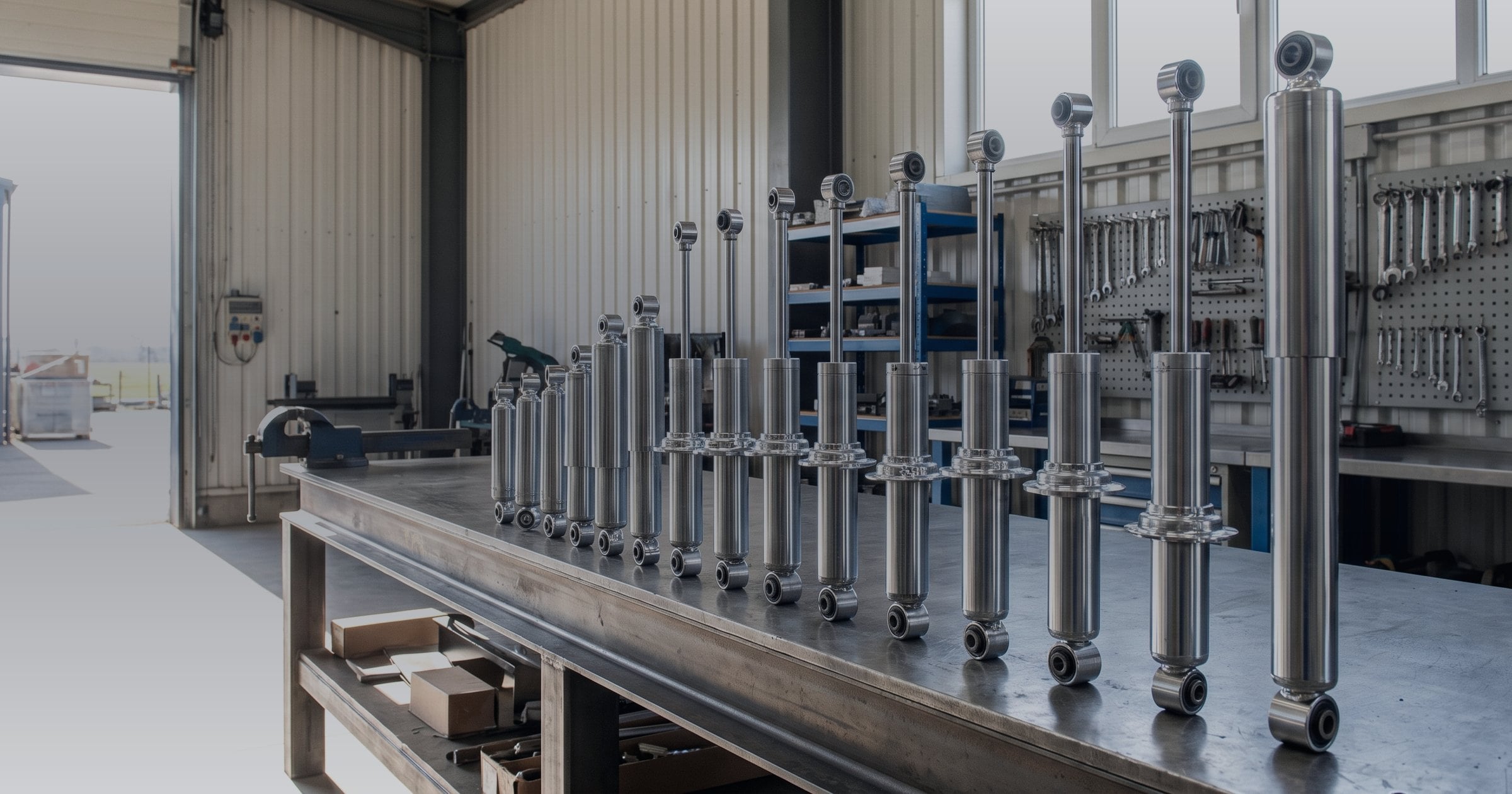
- The shock range is Nitro Gas, 41mm Foam Cell, 40mm and 45mm adjustable, Ralph and the TD-R Pro Series remote reservoir.
- The Foam Cell is a 41mm bore twin tube shock with an 18mm double chrome-plated rod.
- Both adjustable shocks carry 9 stage external adjustment.
- Lift height is a certification question. In Queensland, high lift up to 150mm is covered by code LS9 for design certification and LS10 for modification certification, which count suspension, tyres and body blocks together (Queensland Government).
Quick Links
- What Tough Dog makes
- The shock range and what bore size means
- Choose by load, not by height
- What Tough Dog gear costs
- The 40mm against 50mm question
- Fitment and the parts people forget
- Common questions
What Tough Dog makes
Tough Dog is an Australian 4WD suspension brand. Its own site lists shock absorbers, springs, steering dampers, upper control arms, airbags and GVM upgrades, worked on from a Sydney headquarters, with the range trusted in over 55 countries. Complete lift kits are how most of that gets sold.
At 4,185 listings it is one of the larger brand hubs we run, so coverage extends past the obvious three utes to older LandCruisers, Patrols, Suzukis and Daihatsus.
A lift kit is a matched set of springs and shocks, sold together, valved and rated to work as one package at a stated ride height. Buying a kit rather than assembling parts is the safer route, because the damping is matched to the spring rate out of the box.
GVM upgrades are offered on a number of platforms too. That is a separate exercise, because a GVM upgrade is an engineered and certified change to the vehicle’s rated mass. Treat it as its own project with its own paperwork.
The shock range and what bore size means
The shock is where most of the money and most of the difference sits. Most of the range is named by bore size, and a bigger bore generally means more oil volume and more surface area to shed heat.
Two cautions before the table. No bore figure is published for the Nitro Gas or the TD-R Pro Series on the pages we checked, so those cells say so rather than guessing. And the shock sold as the “53mm Ralph” is described on its own page as a 50mm bore in a 70mm casing, so treat 53 as a model name, not a measurement.
| Shock | Bore | Adjustment | Notable detail | Recreational warranty |
|---|---|---|---|---|
| Nitro Gas | Not published | Not published | Low pressure nitrogen gas charged | 3 year, unlimited km |
| Foam Cell | 41mm | Fixed | Twin tube, 18mm double chrome-plated rod | 4 year, unlimited km |
| 40mm Adjustable | 40mm internal bore | 9 stage external | 60mm external casing, 18mm chrome-plated rod | 4 year, unlimited km |
| 45mm Big Bore Adjustable | 45mm internal bore | 9 stage external | 70mm external casing, 22mm chrome-plated rod | 4 year, unlimited km |
| Ralph, sold as “53mm Ralph” | 50mm bore | Not published | Twin tube, 70mm casing, 20mm double chrome-plated rod | 4 year, unlimited km |
| TD-R Pro Series | Not published | Not published | Remote reservoir design | Not published |
All warranties are stated with conditions applying. Sources: Tough Dog shock absorbers, Nitro Gas, Foam Cell, 40mm adjustable, 45mm adjustable, Ralph.
That warranty column is worth a second look. The Nitro Gas is the entry shock and carries 3 years unlimited kilometres, where the Foam Cell, both adjustables and the Ralph carry 4 years for recreational use and 3 years for commercial use. If the vehicle works for a living, every one of them lands on the same 3 year term.
What the foam cell actually does
A foam cell shock is a twin tube shock absorber with a micro-cellular foam insert in the outer chamber. The published claim for that insert is that it “helps to drastically reduce the effects of shock fade”, by eliminating the air bubbles that form during operation so oil viscosity and shock performance stay consistent.
You have probably felt the problem it addresses. On long corrugations a shock heats up, the oil and gas mix, viscosity drops and the damping goes soft. The vehicle floats and the steering gets vague. That is fade, and it arrives exactly when you need control most.
The published feature list also includes high temperature all weather oil, multi stage velocity sensitive valving, a rod wiper and multi lip seal, a hydraulic rebound stop, and additional welding on all studs and eyerings.
Foam cell appears in the specifications of both the 40mm and the 45mm adjustable shocks as well, not only on the 41mm unit. So the choice between them is bore size and adjustment, not foam cell against no foam cell.
Is adjustable worth it
The 9 stage external adjustment lets you change how firm the shock is without removing it. It earns its keep on a vehicle whose load changes a lot, such as a ute that runs empty midweek and tows a van at the weekend. A vehicle carrying the same weight every day does not need it.
The published warranty is 4 years unlimited kilometres recreational, or 3 years unlimited kilometres commercial, covering the Foam Cell, both adjustable shocks and the Ralph, with conditions applying.
Choose by load, not by height
This is the part people get backwards, and it is the most common reason a new kit disappoints.
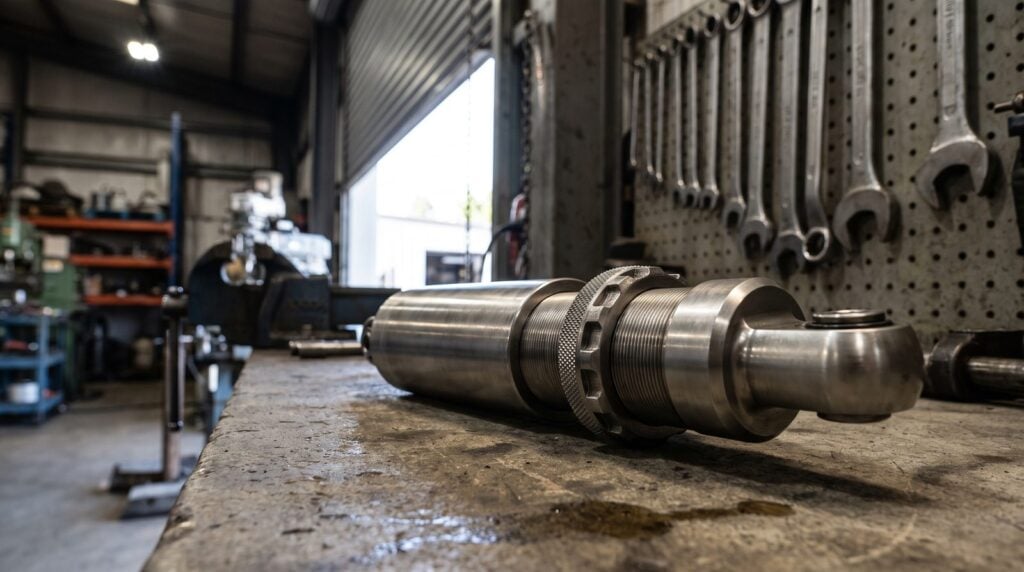
Constant load is the weight that sits on the vehicle all the time. A steel bar, a winch, a dual battery, drawers, a fridge, a long range tank and a roof rack are constant load. A tinny you take twice a year is not.
Springs are chosen against that constant load. Fit a spring rated for more weight than you carry and the ride gets harsh and skips over corrugations. Fit one rated for less and it sags, the lift disappears under load, and the shock runs out of travel.
Where a load band is published, it appears in the listing title. Our Tough Dog leaf spring for the Toyota Hilux N70 (04/2005 to 2015) is listed as 0 to 300kg, for instance. Not every listing carries one, so if you cannot see a band against the spring you want, ask us for it before ordering rather than assuming the standard rate suits your build.
| What you have | What to specify |
|---|---|
| Stock ute, no bar, no canopy, weekend touring | Lightest constant load band |
| Bull bar and winch, no rear load | Heavier front, standard rear |
| Canopy, drawers, fridge, long range tank | Heavier rate both ends |
| Tray with a permanent load, or regular towing | Heaviest band, and consider adjustable shocks |
Front and rear are specified separately, because a winch and a steel bar load the front while a canopy loads the rear. Weigh the vehicle rather than guessing. A weighbridge visit costs very little and removes the guesswork.
A coil spring spacer is a packer that sits above the spring to add a small amount of height. It is a levelling tool, not a substitute for the correct spring rate. Spacers are useful to correct a rake or recover lost height, for instance when a bar has pulled the nose down, but they do not add load capacity.
What Tough Dog gear costs
Our price is the floor of each range, and fitting, alignment and any certification are on top.
| Part group | Willys price | Example listing |
|---|---|---|
| Complete lift kit | from $1,078.25 | 50mm kit, Toyota Prado 250 Series (2024 on) |
| Steering damper | from $123.50 | Suzuki Sierra (07/1974 to 05/1999) |
| Heavy duty steering damper | from $152.00 | Nissan Patrol (02/1988 to 1997) |
| Coil spring spacer | from $19.00 | Suzuki Jimny (2019 on) |
| Leaf spring | from $147.25 | Daihatsu Rocky SWB F70, F75 |
| Leaf spring bushes | from $123.50 | Daihatsu Narrow Track Feroza |
| Foam Cell shock absorber | from $180.50 | Toyota HiLux KUN26 and GGN25R (04/2005 to 2015) |
| Greasable rear shackles | from $85.50 | Mitsubishi Triton MQ and MR |
| Shock absorber bushes, consumable | from $3.00 | Suzuki Jimny (2019 on) |
Two warnings about that table, because a floor price is only useful if you can actually buy it.
First, some of those floors sit on small, mostly petrol 4WDs. The cheapest steering damper at $123.50 is a Suzuki Sierra, and the cheapest leaf spring at $147.25 is a Daihatsu Rocky. If you drive a diesel Patrol, LandCruiser or Hilux, the figures that matter to you are the ones on your own platform: the heavy duty Patrol steering damper at $152.00 and the N70 Hilux Foam Cell at $180.50. Those are the realistic reference points for a diesel touring build, not the absolute catalogue floors.
Second, read the $3.00 row carefully. Those are rubber shock absorber bushes, a consumable that goes in with a shock. They are not a shock, and it is an easy line to misread in a search result.
The Foam Cell price is one application, the N70 Hilux, rather than a range floor. Shock pricing moves a long way across platforms, so check your own vehicle.
For wider context, across all brands we list 296 lift kits from $1,003.20 to $10,100.00. Tough Dog kits sit in the lower part of that spread.
The 40mm against 50mm question
Everyone asks whether to go 40mm or 50mm, and almost everyone assumes the taller kit costs more. Our own catalogue says otherwise, and once you see it the whole decision changes shape.
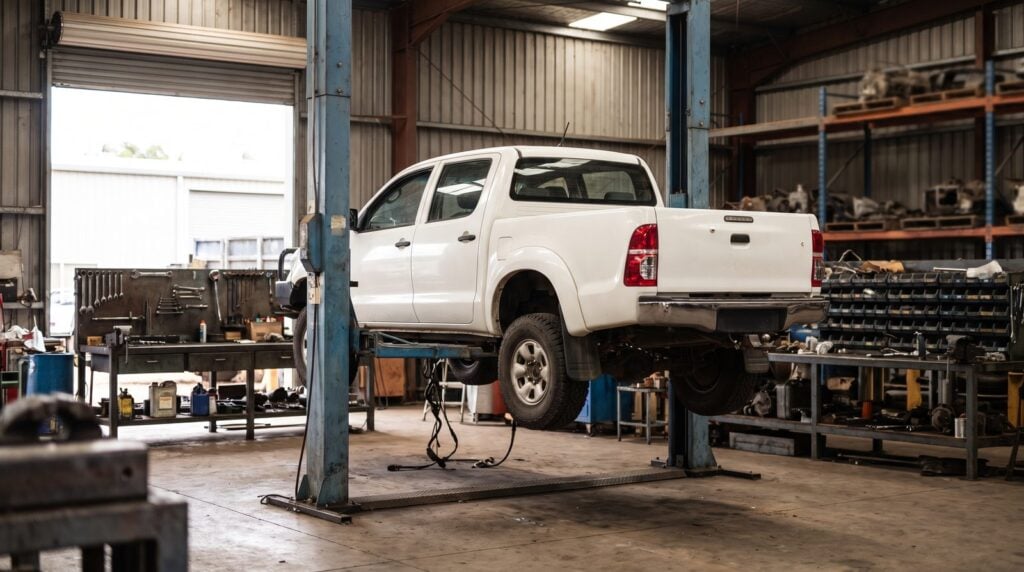
Here are five Tough Dog kits from the affordable end of our range, priced live, so you can check the argument rather than take it on trust. Sort the lift kits category by price if you want the current order in full.
| Kit | Lift | Willys price |
|---|---|---|
| Toyota Prado 250 Series (2024 on) | 50mm | $1,078.25 |
| Toyota LandCruiser 80 and 105 Series (05/1990 to 2007) | 50mm | $1,392.70 |
| Toyota FJ Cruiser (2011 to 2016) | 40mm | $1,474.40 |
| Daihatsu Feroza CX12, F300 Narrow Track (10/1988 to 1998) | 40mm | $1,458.25 |
| Nissan Navara NP300, excluding Warrior Pro (11/2020 on) | 20mm | $1,474.40 |
Now read the two ends against each other. The cheapest kit in the group, at $1,078.25, is a 50mm kit for the Prado 250 Series. The two 20mm kits in the same group, for the Pajero Sport QE and QF at $1,464.90 and the NP300 Navara at $1,474.40, are both dearer than either of the two 50mm kits. The smallest lift on the list costs around $280 more than the biggest.
Be precise about what that does and does not show. It is not a rule that taller is always cheaper. Both 50mm kits in the list sit at the cheap end, and several 40mm kits cost more than either of them. The point is narrower and more useful than a rule: lift height on its own does not tell you what a kit will cost. Platform, damper type and how much hardware the kit carries all matter more.
So height is not the price driver. The platform is. A kit for a modern independent front suspension wagon carries more engineering than a kit for a live axle LandCruiser, whatever the lift number says. A $400 gap between two kits tells you about the vehicles, not about the amount of lift.
The consequence is that “I will go 40mm because 50mm costs more” is not a real reason on most platforms. The real reasons to stop at a smaller lift are geometry and paperwork.
Geometry first. The more you lift an independent front end, the further the control arms and CV angles move from where the factory intended. Upper control arms exist to correct that, and they are an added cost that scales with lift.
Paperwork second, and this is the part that catches people. The Queensland code LS10 “provides modification standards for lifting vehicle ride height by changes to suspension, tyres or body blocks on light vehicles of categories MC (Off Road Passenger Vehicle), NA (Light Goods Vehicle with GVM up to 3,500 kg) and NB1 (Medium Goods Vehicle with GVM up to 4,500kg)”. The resource is titled “LS10 High Lift – Up to 150mm (Modification Certification)”, and LS9 is the design certification counterpart covering the same 150mm.
| Certification point | What applies |
|---|---|
| Queensland high lift codes | LS9 design certification, LS10 modification certification, both up to 150mm |
| What the code counts together | Suspension, tyres and body blocks |
| Vehicle categories covered | MC, NA with GVM up to 3,500 kg, NB1 with GVM up to 4,500 kg |
Source: Queensland Government.
Two things follow from that wording. A taller tyre counts toward your total lift rather than sitting outside it. And once you are in the certified band, an approved person has to sign the vehicle off.
The national technical requirements sit in Section LS of the National Code of Practice for Light Vehicle Construction and Modification, published by Queensland Transport and Main Roads. Each state administers it, so confirm current thresholds with your own road authority. We are not certifiers and this is not certification advice.
Pick the lift that suits your load, your tyre size and the paperwork you are prepared to do. Do not pick it on price, because on this brand price does not follow height.
Fitment and the parts people forget
Suspension parts are built to a specific vehicle, series and often a build date range. Look at how the listings read: “Toyota Prado 150 Series Kakadu Only (2010 on)” and “Nissan Navara NP300 Ex. Warrior Pro (11/2020 on)”. Those qualifiers matter. Kakadu and Warrior variants leave the factory with different suspension, so the standard kit does not suit them. Order against your build date, series and variant, not the model year on the registration paper.
Three things are commonly left off the order and then hold the job up on the hoist:
- Bushes and pins. Old bushes are usually past it, and pressing new ones in while everything is apart costs little next to doing the job twice.
- A steering damper. A steering damper is a small shock mounted across the steering linkage that absorbs kickback from the road. On a live axle vehicle with bigger tyres it changes how tiring the steering feels on corrugations.
- Greasable shackles on leaf sprung vehicles. Tough Dog sets start at $85.50, and it is sensible work while the rear is apart.
One more, less obvious. Lifting a vehicle changes the travel the shocks work through, along with brake line and driveline angles. A matched kit accounts for that. A pile of separately bought parts often does not.
Common questions
Is Tough Dog suspension any good?
It is a long established Australian brand, which says it has been making tracks since 1985 from a Sydney headquarters and is trusted in over 55 countries. The Foam Cell shock carries a 4 year unlimited kilometre recreational warranty, with conditions applying. As with any brand, the result depends more on specifying the right spring rate for your load than on the badge.
What is the difference between Foam Cell and the adjustable shocks?
Bore size and adjustment. The Foam Cell is a 41mm twin tube shock with an 18mm rod and fixed damping. The adjustable shocks come in 40mm and 45mm internal bore with 9 stage external adjustment, larger casings and, on the 45mm, a 22mm rod. Foam cell is listed in the specifications of the adjustable shocks too, so the decision is bore and adjustment rather than one technology against another.
Is the Ralph really a 53mm shock?
It is sold as the “53mm Ralph”, but Tough Dog’s own page for it describes a 50mm bore and a 20mm chrome piston rod housed in a 70mm casing. Read 53mm as a model name rather than a bore measurement. It is still the largest bore shock in the range.
How much does a Tough Dog lift kit cost?
Complete kits in our catalogue start at $1,078.25, currently a 50mm kit for the Prado 250 Series. The other four kits in the list below are dearer than that, and the spread between them is narrower than most people expect. Fitting, a wheel alignment and any certification are on top. That is a floor, not a ceiling, so check your own platform.
Should I get a 40mm or a 50mm lift?
Choose on load, tyre size and certification, not on price. Across the Tough Dog kits we list, price and lift height do not track each other, because platform complexity drives the cost rather than the amount of lift. The larger the lift, the more likely you need upper control arms and a certification sign off.
Do I need a lift certified in Australia?
Past a modest increase, yes, and the exact point depends on your state. Ride height changes sit under Section LS of the National Code of Practice, and in Queensland a high lift up to 150mm is handled under LS9 for design certification and LS10 for modification certification, with those codes treating suspension, tyres and body blocks as one total rather than separately. So bigger tyres count toward it.
No millimetre threshold is quoted here on purpose. It varies by state and it changes, so we confirm the current figure for yours before anything is ordered.
Will a lift kit fix my sagging rear end?
Only if the spring rate matches the weight you carry. A taller spring with the wrong rate sags again as soon as the load goes back on. Weigh the vehicle, work out the constant load, then specify the spring against that figure.
Are the $3.00 Tough Dog parts really shock absorbers?
No. Those are shock absorber bushes, a rubber consumable that goes in with a shock. They are worth replacing whenever shocks are changed, but they are not a shock.
Match the kit to the load, not the look
Suspension is the upgrade owners most often buy twice, because the first one was chosen on height and the second on load. Get the load right and the kit lasts.
Send us your VIN, build date and a rough list of what you carry through our contact page and we will confirm the right spring rate and kit before you order.
Our founder Willy has more than 20 years on the tools as a heavy diesel mechanic, and the team works on diesel 4WDs across our Brisbane and Sunshine Coast workshops. You can read more about us and how we work.
Last updated: July 2026