 By Willy · Founder & Lead Diesel Specialist
Willys Workshop · Oxley & Warana · 20+ years hands-on diesel experience
The 300 Series LandCruiser launched in Australia in 2021 as a diesel only, with a 3.3 litre twin turbo V6 making 227kW and 700Nm through a 10 speed automatic. A twin turbo petrol V6 hybrid joins the range from mid 2026, but only in two grades. Get that split right before you spend anything, because a part listed as “300 Series V6” doesn’t tell you which engine it suits.
This guide covers which engine you have, what the factory weight numbers allow, the order we build these in, and where the exhaust has to start on a vehicle with a diesel particulate filter.
Quick Links
- Diesel or petrol hybrid
- Factory weight and towing figures
- Towing 3,500kg and the GCM limit
- Build order, stage by stage
- Known problems
- Exhaust and the DPF
- What 300 Series parts cost
- Common questions
Diesel or petrol hybrid
Both engines in the global 300 Series are twin turbo V6s, which is why the listings get confused.
The F33A-FTV is Toyota’s 3.3 litre twin turbo V6 diesel. Every Australian-delivered 300 Series diesel runs it, through a 10 speed auto with all wheel drive. When the Australian specs came out on 28 June 2021, the local range was diesel only.
The V35A-FTS is the twin turbo petrol V6 in the i-FORCE MAX Performance Hybrid. It’s only offered in the GR Sport Hybrid and Sahara ZX Hybrid. Toyota Australia quotes 341kW and 790Nm combined, but calls the hybrids pre-production and says final specs may differ.
| Variant | Engine | Power | Torque | Transmission | Australian availability |
|---|---|---|---|---|---|
| Diesel | F33A-FTV, 3.3L twin turbo V6 | 227kW | 700Nm | 10 speed automatic | 2021 on, all grades |
| Petrol hybrid | V35A-FTS twin turbo V6 with electric motor | 341kW combined | 790Nm combined | 10 speed automatic | GR Sport Hybrid and Sahara ZX Hybrid only |
If your 300 Series came new through Toyota Australia before 2026, it’s the diesel. We still ask, because a vehicle that came into the country some other way may not be. The hybrid isn’t a diesel with a different badge either. It has electric power steering where the diesel has hydraulic, and diesel filtration and exhaust parts shouldn’t go on it. Nothing in this guide applies to the hybrid.
Factory weight and towing figures
These are the numbers your build has to fit inside. Check them against your own compliance plate before you commit.
| Specification | Figure |
|---|---|
| Gross vehicle mass (GVM) | 3,280kg |
| Gross combined mass (GCM) | 6,750kg |
| Kerb mass | from 2,495kg |
| Payload | 650kg to 785kg depending on grade |
| Braked towing capacity | 3,500kg |
| Maximum ball weight | 350kg, being 10 per cent of the braked tow rating |
Gross combined mass is the most the loaded vehicle and loaded trailer can legally weigh together. Ball weight is the load the trailer puts down on the tow ball, and it comes out of your payload, not your tow rating.
A GX with 785kg of payload has room to build. A VX, Sahara or GR Sport at 650kg doesn’t. Around 350kg of a heavy van sits on the ball, which leaves 300kg for people, fuel, water and accessories.
Towing 3,500kg and the GCM limit
The brochure doesn’t spell this out. The 300 Series is rated to tow 3,500kg braked and its GCM is 6,750kg. Take one from the other and the vehicle can weigh at most 3,250kg while towing at full rating. The factory GVM is 3,280kg, so at maximum tow you’re 30kg under your own GVM.
Work it through on a 2,630kg vehicle. Not towing, you’ve got 650kg of payload up to the 3,280kg GVM. Towing 3,500kg, the GCM caps you at 3,250kg, so payload drops to 620kg and 350kg of that is ball weight. That leaves about 270kg for people and everything else. It’s two adults, before a bull bar, a winch, drawers or a second battery.
That’s also why a GVM upgrade on its own doesn’t fix towing. A GVM upgrade is an engineered suspension change that raises the legal gross vehicle mass. It only counts once it’s certified and the new plate is issued. It raises GVM but not GCM. Lift GVM to 4,139kg and leave GCM at 6,750kg, and the vehicle is still capped at 3,250kg at maximum tow. The extra capacity is only usable at lower tow weights.
So a 300 Series is either a heavy tow vehicle or a heavily loaded tourer. If you want both at once, get it on a weighbridge.
Build order, stage by stage
Power comes last. Each stage protects what you spent on the one before it.
- Weight and suspension, including GVM certification.
- Filtration and oil control: a secondary fuel filter and a catch can.
- Heat: transmission cooling and charge air cooling.
- Exhaust, matched to where you want the system to start.
- Tune, on hardware that’s already healthy.
Stage 1: weight and suspension
This goes first because the weight limits bite well before power does. On this vehicle the GVM upgrade and a matched lift are the same job, and the certification is what makes it legal.
There are two complete certified options: a Tough Dog 4,139kg GVM upgrade for the 2021 on 300 Series, and a West Coast Suspensions GVM upgrade lift kit rated to 3,800kg. For a lift without the GVM change there’s a Tough Dog 35mm to 50mm kit that suits the GR Sport only, and a West Coast Suspensions 2 inch monotube kit. Fitting, alignment and certification go on top of any of them.
Get the height right before you order. Our 4WD lift kit sizing guide covers why more lift isn’t automatically better on an independent front end, and the Tough Dog suspension guide explains how their ranges are set out.
Stage 2: filtration and oil control
A secondary fuel filter kit is an extra water separating filter plumbed in ahead of the factory one, so water and fine dirt get caught before they reach the injectors. A catch can does the same job on the air side. It takes oil vapour out of the crankcase breather before it meets soot in the intake and bakes on hard.
There are combo kits that do both, a PreLine-Plus pre-filter with a ProVent catch can, or a Fuel Manager pre-filter and catch can kit. Fit them early. Both are preventative and won’t undo damage that’s already done.
Stage 3: heat
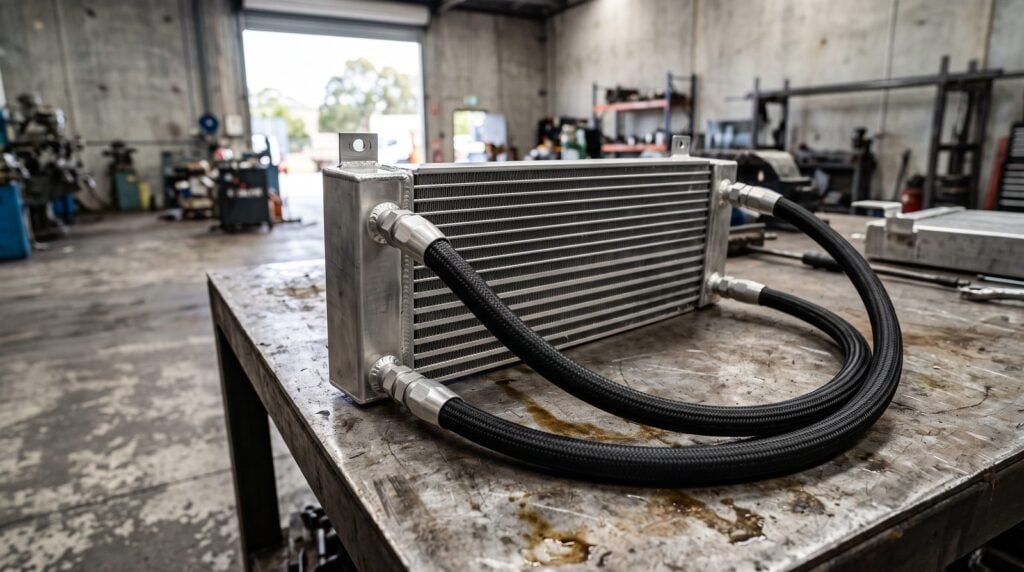
Heat is the complaint that keeps coming up with 300 Series owners, so deal with it before any power work. For the gearbox there’s a TransChill Arctic Black kit or a 300 Series transcooler kit. On the charge air side there’s a heat exchanger, or a heat exchanger and intercooler kit.
If you tow in a Queensland summer, do this stage before the exhaust. If it drops into restricted mode on a hot climb, it’s short on cooling, and more power won’t help.
Stage 4: exhaust
On this vehicle where the system starts matters more than the pipe size. That’s covered in the exhaust section below.
Stage 5: tune
A tune on healthy hardware is where the drivability is, mainly throttle response and how the 10 speed holds a gear under load. A tune on a vehicle that’s already heat limited just finds the limit sooner. We write the tune to the hardware in front of us, so tell us what’s fitted before you book.
Known problems
Heat is first. Hot weather can push the engine into a restricted power setting, mostly under heavy load, and that’s the reason cooling comes before power. After that, owners report turbo variable geometry actuator problems (not common), intake and bypass valve surges with no official fix at the time of writing, some jerkiness from the gearbox at low speed, and oil consumption, which is a known issue but not a frequent one.
DPF and regeneration trouble is the common one, as it is on most modern turbo diesels. Software updates on later vehicles made the system noticeably better.
If the vehicle has a history of going into restricted power under load, diagnose the cooling as a fault before you buy parts for it. If it mostly does short trips, expect regeneration trouble. A car doing school runs never gets hot for long enough to finish a regeneration. Buying used, run the VIN through the PPSR for finance owing and stolen or written-off status, and check the recall register at Product Safety Australia.
Exhaust and the DPF
A diesel particulate filter is a canister in the exhaust that traps soot and burns it off every so often in a regeneration cycle. Every diesel 300 Series delivered in Australia has one. It sits close behind the turbos, and every exhaust for this vehicle is named by where it starts relative to the filter.
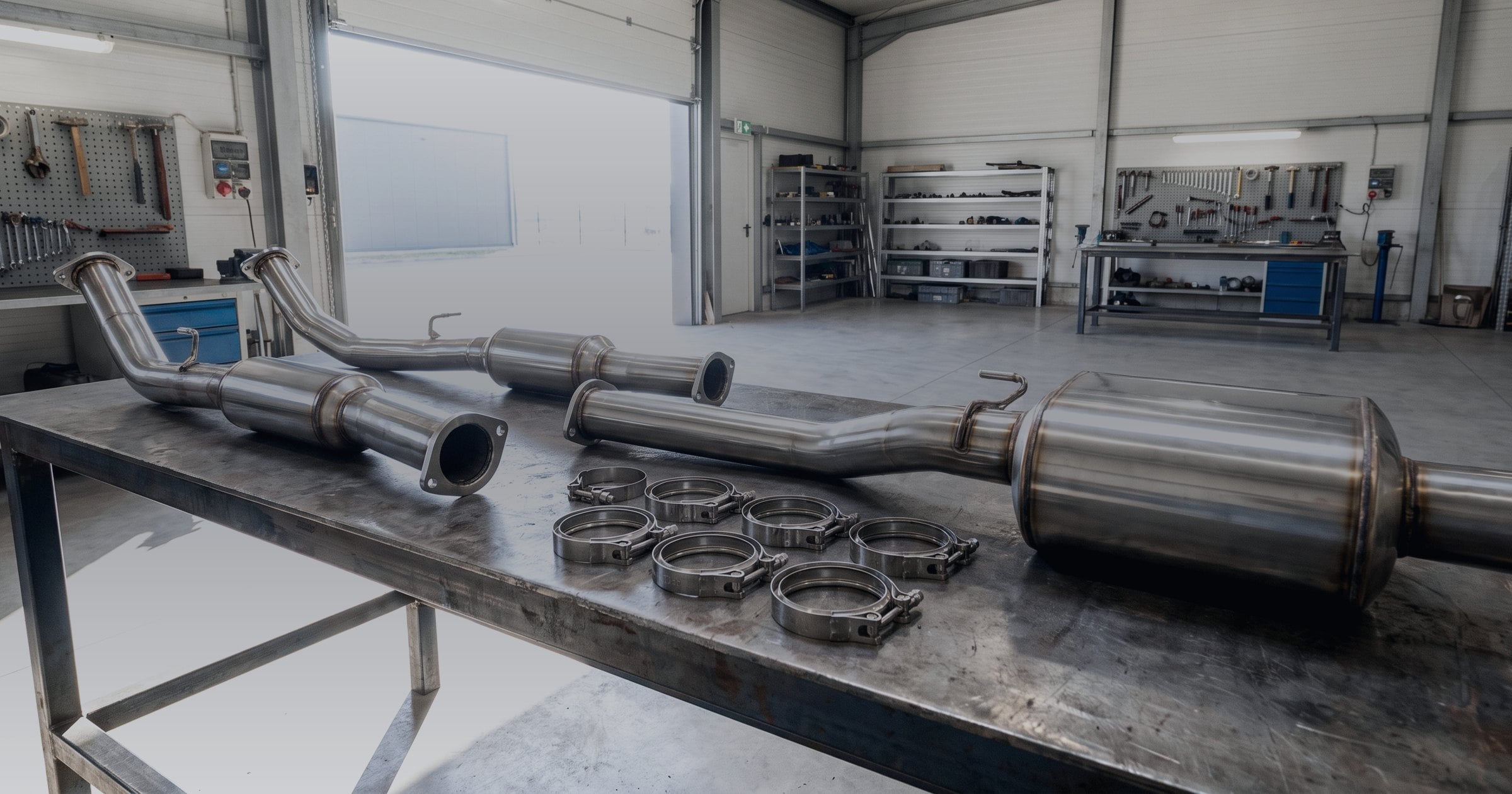
A DPF-back system replaces everything after the factory filter. The filter, its catalyst and the pipework ahead of them stay as they are, so you’re paying for pipe size, muffling and the tip.
A turbo-back system starts at the turbo. On a DPF diesel that means it starts ahead of the factory filter and replaces the section the filter sits in. The two aren’t interchangeable, and the exhaust category we list them in doesn’t separate them, so check which one you’re looking at.
If you want a louder or freer exhaust and the factory filter left as delivered, a complete DPF-back system is the one to buy. They come without a muffler, so allow for a rear muffler on top. The titles only say “300 Series V6” and don’t give the fuel type, so we check the variant against your VIN before anything is ordered. Our Manta exhaust buyers guide covers what the diameter choices change.
What 300 Series parts cost
These are parts prices. Fitting, alignment, engineering certification and ECU work are on top.
| Part | Price |
|---|---|
| Tough Dog 4,139kg GVM upgrade | $2,631.60 |
| West Coast Suspensions 3,800kg GVM upgrade lift kit | $2,928.00 |
| Tough Dog 35mm to 50mm lift kit, GR Sport only | $1,541.00 |
| West Coast Suspensions 2 inch monotube lift kit | $1,649.20 |
| Secondary fuel filter kits | $430.00 to $838.18 |
| Transmission cooler kits | $620.00 to $940.00 |
| Complete DPF-back exhaust, no muffler | $2,334.89 to $2,741.64 |
Other parts from this guide:
- PreLine-Plus pre-filter and ProVent catch can combo kit: $960.00
- Fuel Manager pre-filter and catch can kit: $950.00
- Heat exchanger: $2,150.00
- Heat exchanger and intercooler kit: $2,695.00
- Rear muffler for a DPF-back system: $905.00 for the 3in with a 4in dump tip, or $1,489.99 for the 4in
- Tough Dog GVM rated coil spring: $421.00
Order against a part number, not the bottom of a price range. The cheapest item in a group is often a bush kit or a bracket, not the part the group is named after.
Common questions
Is the Australian 300 Series diesel or petrol?
Diesel. When the Australian specs came out in June 2021 the local range was diesel only. A petrol V6 hybrid joins later, in the GR Sport Hybrid and Sahara ZX Hybrid grades only.
Can I tow 3,500kg and load the vehicle to its GVM at the same time?
No. The GCM is 6,750kg and the braked tow rating is 3,500kg, which leaves 3,250kg for the vehicle. That’s 30kg less than the 3,280kg GVM. Weigh the rig loaded the way you travel.
Does a GVM upgrade increase towing capacity?
Not on its own. It raises the legal gross vehicle mass, for example from 3,280kg to 4,139kg with the Tough Dog kit, once it’s certified and the new plate is issued. It doesn’t touch the 6,750kg GCM, so the towing sums don’t change unless GCM is upgraded separately.
Which 300 Series exhaust leaves the factory DPF untouched?
A DPF-back system. The complete ones run $2,334.89 to $2,741.64 and come without a muffler, so budget a rear muffler from $854.70 on top. A turbo-back starts at the turbo and replaces the section the filter sits in.
Will parts listed for the “300 Series V6” fit my vehicle?
Ask first. The diesel and the petrol are both twin turbo V6s, so that description doesn’t identify the engine. Send us the VIN and build date and we’ll confirm the part number before you order.
Send us your VIN before you order
The badge won’t tell you which V6 you’ve got. Send your VIN, build date and grade through our contact page and we’ll confirm the right part, whether it’s a GVM upgrade, a lift kit, a catch can or a DPF-back exhaust. Our founder Willy has more than 20 years on the tools as a heavy diesel mechanic, and the team works on diesels across our Brisbane and Sunshine Coast workshops.
Last updated: November 2026